CAS 14486-03-4
:L-Methionylglycine
Description:
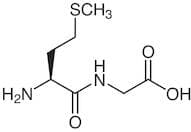
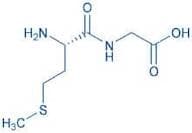
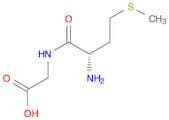
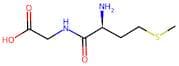
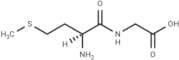
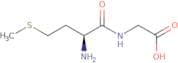
L-Methionylglycine, with the CAS number 14486-03-4, is a dipeptide composed of the amino acids L-methionine and glycine. It is characterized by its structure, which features a methionine residue linked to a glycine residue through a peptide bond. This compound is typically white to off-white in appearance and is soluble in water, reflecting the polar nature of its amino acid components. L-Methionylglycine plays a role in various biological processes, including protein synthesis and metabolism, and is often studied for its potential applications in nutrition and pharmaceuticals. As a peptide, it may exhibit specific biological activities, including antioxidant properties, and can serve as a building block for larger peptides or proteins. Its stability and reactivity can be influenced by factors such as pH and temperature, making it important to consider these conditions in experimental settings. Overall, L-Methionylglycine is a significant compound in biochemistry and molecular biology, contributing to our understanding of peptide functions and interactions.
Formula:C7H14N2O3S
InChI:InChI=1S/C7H14N2O3S/c1-13-3-2-5(8)7(12)9-4-6(10)11/h5H,2-4,8H2,1H3,(H,9,12)(H,10,11)/t5-/m0/s1
InChI key:InChIKey=QXOHLNCNYLGICT-YFKPBYRVSA-N
SMILES:C([C@H](CCSC)N)(NCC(O)=O)=O
Synonyms:- 11: PN: WO2020046069 SEQID: 12 claimed protein
- 16: PN: WO2018144831 SEQID: 16 claimed protein
- 2-[(2S)-2-Amino-4-(methylsulfanyl)butanamido]acetic acid
- 2-[[(2S)-2-Amino-4-methylsulfanylbutanoyl]amino]acetic acid
- 205: PN: WO2008142164 SEQID: 206 claimed protein
- 21: PN: WO2011023914 SEQID: 18 unclaimed protein
- 317: PN: WO2008077945 SEQID: 323 claimed protein
- 34: PN: FR2949473 SEQID: 18 unclaimed protein
- 38: PN: US20100104568 SEQID: 206 claimed protein
- <span class="text-smallcaps">L</span>-Methionylglycine
- Glycine, <span class="text-smallcaps">L</span>-methionyl-
- Glycine, L-methionyl-
- Glycine, N-<span class="text-smallcaps">L</span>-methionyl-
- Glycine, N-L-methionyl-
- H-Met-Gly-OH
- Met-Gly
- Methionylglycine
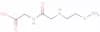
- N-[2-(methylsulfanyl)ethyl]glycylglycine
- NSC 88865
- {[(2S)-2-ammonio-4-(methylsulfanyl)butanoyl]amino}acetate
- See more synonyms
Sort by
Purity (%)
0
100
|
0
|
50
|
90
|
95
|
100
Found 7 products.
L-Methionylglycine
CAS:Formula:C7H14N2O3SPurity:min. 98.0 area%(HPLC)Color and Shape:White to Almost white powder to crystalMolecular weight:206.26H-Met-Gly-OH
CAS:The Pt(II) dipeptide complex (Met-Gly)PtCl₂ shows in vitro toxicity against various tumor cell lines.Formula:C7H14N2O3SPurity:> 99%Color and Shape:White PowderMolecular weight:206.27(S)-2-(2-Amino-4-(methylthio)butanamido)acetic acid
CAS:Formula:C7H14N2O3SPurity:97%Color and Shape:SolidMolecular weight:206.2627(S)-2-(2-Amino-4-(Methylthio)Butanamido)Acetic Acid
CAS:(S)-2-(2-Amino-4-(Methylthio)Butanamido)Acetic AcidFormula:C7H14N2O3SPurity:98%Molecular weight:206.26L-Methionylglycine
CAS:L-Methionylglycine is an agent of the dipeptide.Formula:C7H14N2O3SColor and Shape:SolidMolecular weight:206.26H-Met-Gly-OH
CAS:H-Met-Gly-OH is a radical scavenger that has been shown to have potent antioxidant properties. It is an amide with two nitrogen atoms and can be used as a marker protein in human serum, where it binds to fatty acids and inhibits the formation of free radicals. H-Met-Gly-OH has been shown to chelate metal ions such as copper, iron, and zinc. The uptake of these metal ions by the human body may cause genotoxic effects or other toxic reactions, which can be prevented by using H-Met-Gly-OH as a chelating agent. This compound also has broad spectrum antimicrobial activity against microbes that are resistant to many antibiotics.Formula:C7H14N2O3SPurity:Min. 95%Molecular weight:206.26 g/mol