CAS 14504-07-5
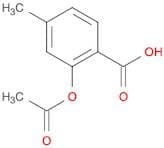
:O-Acetyl-4-methylsalicylic acid
Description:
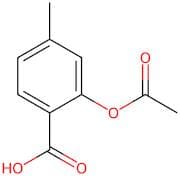
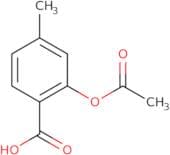
O-Acetyl-4-methylsalicylic acid, with the CAS number 14504-07-5, is a chemical compound that belongs to the class of salicylic acid derivatives. It features an acetyl group and a methyl group attached to the aromatic ring, which contributes to its unique properties. This compound is typically characterized by its white to off-white crystalline appearance and is soluble in organic solvents, such as ethanol and acetone, but has limited solubility in water. O-Acetyl-4-methylsalicylic acid exhibits biological activity, which may include anti-inflammatory and analgesic effects, making it of interest in pharmaceutical research. Its molecular structure allows for interactions with various biological targets, potentially influencing metabolic pathways. Additionally, it may be used in the synthesis of other chemical compounds or as an intermediate in organic synthesis. Safety data should be consulted for handling and usage, as with any chemical substance, to ensure proper precautions are taken.
Formula:C10H10O4
Synonyms:- 2-Acetoxy-4-methylbenzoic acid~O-Acetyl-m-cresotic acid
Sort by
Purity (%)
0
100
|
0
|
50
|
90
|
95
|
100
Found 4 products.
Benzoic acid, 2-(acetyloxy)-4-methyl-
CAS:Formula:C10H10O4Purity:97%Color and Shape:SolidMolecular weight:194.18402-Acetoxy-4-methylbenzoic acid
CAS:2-Acetoxy-4-methylbenzoic acidPurity:97%Molecular weight:194.18g/mol2-(Acetyloxy)-4-methylbenzoic acid
CAS:2-(Acetyloxy)-4-methylbenzoic acid (AMBA) is a compound that is used in the field of health care. It has been shown to have neuroprotective effects and to reduce neuronal apoptosis, which may be due to its ability to attenuate proinflammatory responses. AMBA has also been shown to inhibit the formation of amyloid plaques in Alzheimer's disease. This compound has also shown anti-inflammatory properties and can be used as a treatment for neuroinflammation. AMBA inhibits the activation of caspases, which are responsible for initiating the apoptosis pathway by cleaving proteins necessary for cell survival, such as PARP1 or Bcl-2. The mechanism of action is not fully understood but it appears that AMBA alters mitochondrial function and reduces intracellular calcium levels.Formula:C10H10O4Purity:Min. 95%Molecular weight:194.18 g/mol