CAS 145626-87-5
:Bis(2-mercaptoethyl) sulfone
Description:
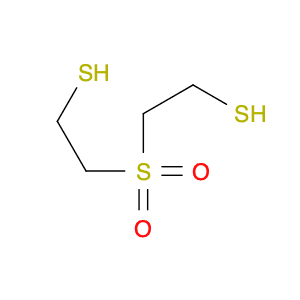
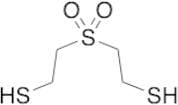
Bis(2-mercaptoethyl) sulfone, also known by its CAS number 145626-87-5, is an organosulfur compound characterized by the presence of two mercaptoethyl groups attached to a sulfone moiety. This compound typically appears as a colorless to pale yellow liquid or solid, depending on its specific form and purity. It is soluble in polar solvents such as water and alcohols, owing to the presence of the thiol groups, which can engage in hydrogen bonding. The mercaptoethyl groups contribute to its reactivity, allowing it to participate in various chemical reactions, including thiol-disulfide exchange and nucleophilic substitutions. Bis(2-mercaptoethyl) sulfone is often utilized in the synthesis of polymers, as a cross-linking agent, and in the formulation of various chemical products due to its ability to enhance the properties of materials. Additionally, it may exhibit biological activity, making it of interest in medicinal chemistry and materials science. Proper handling and safety precautions are essential due to the potential reactivity of thiol groups.
Formula:C4H10O2S3
InChI:InChI=1/C4H10O2S3/c5-9(6,3-1-7)4-2-8/h7-8H,1-4H2
SMILES:C(CS(=O)(=O)CCS)S
Synonyms:- 2,2'-Sulfonyldiethanethiol
- Bis(2-mercaptoethyl)sulfone
Sort by
Purity (%)
0
100
|
0
|
50
|
90
|
95
|
100
Found 4 products.
2,2'-Sulphonyldiethane-1-thiol
CAS:2,2'-Sulphonyldiethane-1-thiolFormula:C4H10O2S3Purity:≥95%Color and Shape: pale yellow solidMolecular weight:186.32g/molBis(2-mercaptoethyl)sulfone
CAS:Controlled ProductStability Air Sensitive, Moisture Sensitive
Applications A useful reagent for the reduction of disulfides in aquous solutions. A superior substitute for DTT.
References Lamoureux, G.V., et al.: J. Org. Chem., 58, 633 (1993), Singh, R., et al.: Protein Sci., 3, suppl 1, 430T (1994)Formula:C4H10O2S3Color and Shape:NeatMolecular weight:186.32Bis(2-mercaptoethyl)sulfone
CAS:Bis(2-mercaptoethyl)sulfone (BMS) is a chemical that can be used to modify the properties of proteins. BMS can be used to increase the solubility of proteins, which can then be purified using liquid chromatography. It also has an extracellular modification capability, which can be activated by adding sodium borohydride or dithiothreitol in order to form a disulfide bond. This reversible reaction is endoplasmic reticulum-dependent and not found in bacteria. BMS binds to DNA with a redox potential of -0.78 V and fluoresces at 564 nm in dimethyl sulfoxide solution. It has been shown to have biochemical properties that are similar to cysteine and glutathione, but does not react with thiols such as mercaptoethanol or glutathione.Formula:C4H10O2S3Purity:Min. 97 Area-%Color and Shape:White PowderMolecular weight:186.32 g/mol