CAS 1459-00-3
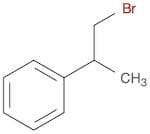
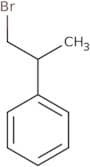
:1-Bromo-2-phenylpropane
Description:
1-Bromo-2-phenylpropane, with the CAS number 1459-00-3, is an organic compound characterized by the presence of a bromine atom attached to a propyl chain that is further substituted with a phenyl group. This compound is classified as an alkyl halide, specifically a bromoalkane, and exhibits typical properties associated with such compounds, including being a colorless to pale yellow liquid at room temperature. It is generally insoluble in water but soluble in organic solvents, reflecting its hydrophobic nature due to the presence of the phenyl group. The compound can participate in nucleophilic substitution reactions, making it useful in organic synthesis. Its reactivity is influenced by the bromine atom, which is a good leaving group. Additionally, 1-bromo-2-phenylpropane may exhibit moderate toxicity, necessitating careful handling and storage. As with many organic halides, it may also pose environmental concerns, particularly regarding its persistence and potential bioaccumulation.
Formula:C9H11Br
InChI:InChI=1S/C9H11Br/c1-8(7-10)9-5-3-2-4-6-9/h2-6,8H,7H2,1H3
InChI key:InChIKey=XJWVCWQKZQENDS-UHFFFAOYSA-N
SMILES:C(CBr)(C)C1=CC=CC=C1
Synonyms:- (1-Bromopropan-2-yl)benzene
- (2-Bromo-1-methylethyl)benzene
- 1-Bromo-2-phenylpropane
- 1-Bromopropan-2-ylbenzene
- 2-Methyl-2-phenylethyl bromide
- 2-Phenylpropyl bromide
- Benzene, (2-bromo-1-methylethyl)-
- Cumene, β-bromo-
- NSC 43688
- [(2S)-1-bromopropan-2-yl]benzene
- beta-Bromocumene
- See more synonyms
Sort by
Purity (%)
0
100
|
0
|
50
|
90
|
95
|
100
Found 3 products.
1-Bromo-2-phenylpropane
CAS:1-Bromo-2-phenylpropane is a chemical compound that can be used as an intermediate in the synthesis of other compounds. It is a rate enhancement agent that can be used to increase the reaction speed of chemical reactions. 1-Bromo-2-phenylpropane reacts with ethyl bromide and dimethylformamide to form the corresponding products, which are then reacted with proton sources to form bifluorenylidene. The deuterium isotope has been shown to improve the reaction rate by increasing the nucleophilic attack on halides. Organic chemists use this chemical compound to synthesize carbonyl groups from organic halides.Formula:C9H11BrPurity:Min. 95%Molecular weight:199.09 g/mol