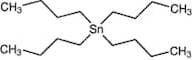
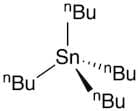
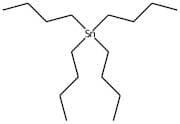
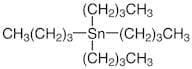
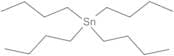
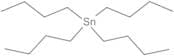
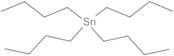
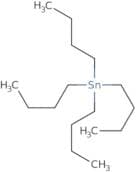
CAS 1461-25-2
:Tetrabutyltin
- Nsc 22330
- Nsc 28131
- Nsc 65524
- Tetra-n-butylstannane
- Tetra-n-butyltin
- Tetrabutilesta No
- Tetrabutyl tin
- Tetrabutyletain
- Tetrabutylstannan
- Tetrabutylstannane
- Tetrabutyltin
- Tetrabutyltin(IV)
- Tetrabutylzinn
- Tetrabutyltintech
- Tetra-n-butylstannane~Tin tetrabutyl
- See more synonyms
Tetra-n-butyltin, 95%
CAS:Tetra-n-butyltin is used in hydrogenolysis reactions and as a transition metal catalyst. It is also used stabilizers in the manufacture of polyvinyl chloride. This Thermo Scientific Chemicals brand product was originally part of the Alfa Aesar product portfolio. Some documentation and label informatFormula:C16H36SnPurity:95%Color and Shape:Liquid, Pale yellowMolecular weight:347.17Tetra-n-butyltin, min. 94%
CAS:Tetra-n-butyltin, min. 94%
Formula:Sn(C4H9)4Purity:min. 94%Color and Shape:colorless liq.Molecular weight:347.16Organometallic Butyltin Chloride Mixture 2000 µg/mL in Dichloromethane
CAS:Controlled ProductColor and Shape:MixtureTetrabutyltin
CAS:Formula:C16H36SnPurity:>95.0%(GC)Color and Shape:Colorless to Almost colorless clear liquidMolecular weight:347.17Terbutyltin 1000 µg/mL in Methanol
CAS:Controlled ProductFormula:C16H36SnColor and Shape:Single SolutionMolecular weight:347.17Tetrabutylstannane
CAS:Controlled ProductApplications Tetrabutylstannane, which is used in hydrogenolysis reactions and as a transition metal catalyst.
Not a dangerous good if item is equal to or less than 1g/ml and there is less than 100g/ml in the package
References Barbelli, M. et al.: Biores. Tech., 111, 500 (2012);Formula:C16H36SnColor and Shape:NeatMolecular weight:347.17Tetrabutyltin
CAS:Controlled ProductTetrabutyltin is a reactive organometallic compound and is used as a catalyst in organic synthesis. Tetrabutyltin is also used to measure the activity of cytochrome P450 enzymes in vitro by adding it to the reaction solution and measuring the hydroxyl group-dependent oxidation of ethoxyresorufin. This analytical method can be used for the detection of hydroxyl groups in environmental samples, such as wastewater treatment plants. Tetrabutyltin exhibits high values for plasma mass spectrometry, making it useful for measuring concentrations of organometallic compounds in air or water vapor.
Formula:C16H36SnPurity:Min. 95%Color and Shape:Clear LiquidMolecular weight:347.17 g/mol