CAS 146132-95-8
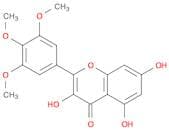
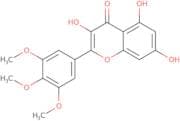
:3,5,7-Trihydroxy-3',4',5'-trimethoxyflavone
Description:
3,5,7-Trihydroxy-3',4',5'-trimethoxyflavone, identified by its CAS number 146132-95-8, is a flavonoid compound characterized by its multiple hydroxyl and methoxy functional groups. This structure contributes to its potential antioxidant properties, which can help in scavenging free radicals and reducing oxidative stress. The presence of hydroxyl groups enhances its solubility in polar solvents, while the methoxy groups can influence its biological activity and interaction with various enzymes and receptors. Flavonoids, including this compound, are known for their diverse pharmacological effects, including anti-inflammatory, antimicrobial, and anticancer activities. Additionally, the specific arrangement of hydroxyl and methoxy groups can affect the compound's stability, reactivity, and overall bioavailability. Research into such compounds often focuses on their potential health benefits and applications in nutraceuticals and pharmaceuticals, making them of significant interest in both medicinal chemistry and dietary studies.
Formula:C18H16O8
InChI:InChI=1/C18H16O8/c1-23-12-4-8(5-13(24-2)18(12)25-3)17-16(22)15(21)14-10(20)6-9(19)7-11(14)26-17/h4-7,19-20,22H,1-3H3
SMILES:COc1cc(cc(c1OC)OC)c1c(c(=O)c2c(cc(cc2o1)O)O)O
Synonyms:- Myricetin trimethyl ether
- 3,5,7-trihydroxy-2-(3,4,5-trimethoxyphenyl)-4H-chromen-4-one
Sort by
Purity (%)
0
100
|
0
|
50
|
90
|
95
|
100
Found 3 products.
3,5,7-trihydroxy-2-(3,4,5-trimethoxyphenyl)-4H-chromen-4-one
CAS:Formula:C18H16O8Molecular weight:360.31483,5,7-Trihydroxy-3',4',5'-trimethoxyflavone
CAS:3,5,7-Trihydroxy-3',4',5'-trimethoxyflavone is a natural product for research related to life sciences.Formula:C18H16O8Purity:98%Color and Shape:SolidMolecular weight:360.31Myricetin trimethyl ether
CAS:Myricetin trimethyl ether is a flavonoid derivative, which is a metabolite of myricetin, a naturally occurring flavonoid found in various fruits, vegetables, and herbs. This compound is of significant interest due to its potential bioactive properties. It is commonly studied within the context of its antioxidative mechanisms, where it functions by neutralizing free radicals and attenuating oxidative stress, a key factor implicated in the pathogenesis of numerous chronic diseases.Formula:C18H16O8Color and Shape:PowderMolecular weight:360.31 g/mol