CAS 14617-86-8
:p-Nitrophenyl stearate
Description:
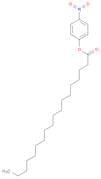
p-Nitrophenyl stearate is an organic compound characterized by its ester functional group, formed from the reaction of p-nitrophenol and stearic acid. It typically appears as a pale yellow solid or crystalline substance. The presence of the p-nitro group on the phenyl ring imparts specific chemical properties, including increased polarity and potential reactivity in nucleophilic substitution reactions. This compound is often used as a substrate in enzymatic assays, particularly for studying lipases and esterases, due to its ability to release p-nitrophenol upon hydrolysis. The solubility of p-nitrophenyl stearate is generally low in water but higher in organic solvents, which makes it suitable for various applications in organic synthesis and biochemistry. Additionally, its stability under standard laboratory conditions allows for its use in various experimental setups. Safety precautions should be taken when handling this compound, as it may pose health risks if ingested or inhaled, and appropriate protective equipment should be used.
Formula:C24H39NO4
InChI:InChI=1S/C24H39NO4/c1-2-3-4-5-6-7-8-9-10-11-12-13-14-15-16-17-24(26)29-23-20-18-22(19-21-23)25(27)28/h18-21H,2-17H2,1H3
InChI key:InChIKey=HAIZAZONHOVLEK-UHFFFAOYSA-N
SMILES:O(C(CCCCCCCCCCCCCCCCC)=O)C1=CC=C(N(=O)=O)C=C1
Synonyms:- 4-Nitrophenyl Octadecanoate
- Octadecanoic acid, 4-nitrophenyl ester
- Stearic acid, p-nitrophenyl ester
- p-Nitrophenyl octadecanoate
- p-Nitrophenyl stearate
- 4-Nitrophenyl stearate
Sort by
Purity (%)
0
100
|
0
|
50
|
90
|
95
|
100
Found 5 products.
Octadecanoic acid, 4-nitrophenyl ester
CAS:Formula:C24H39NO4Purity:95%Color and Shape:SolidMolecular weight:405.57084-Nitrophenyl stearate lipase substrate
CAS:Formula:C24H39NO4Purity:≥ 95.0%Color and Shape:White to light yellow powder or solidMolecular weight:405.574-Nitrophenyl stearate
CAS:4-Nitrophenyl stearate is a fatty acid that can be used as a surfactant in cationic detergents. It has been shown to have the ability to act as a substrate for lipolytic enzymes and bacterial lipases. The isolated yield of 4-nitrophenyl stearate is approximately 92%. Lipolytic enzymes such as lipase, phospholipase, and esterase can hydrolyze the fatty acids into glycerol and fatty acids. The reaction proceeds under high salt conditions with an optimal pH of 10. Plant physiology studies have found that 4-nitrophenyl stearate acts as an allelopathic agent and inhibits the growth of plants by blocking photosynthesis. Recombinant proteins are generated using molecular methods such as DNA sequencing or PCR amplification.Formula:C24H39NO4Purity:Min. 95%Molecular weight:405.57 g/mol