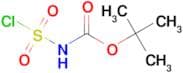
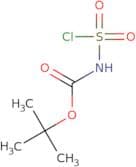
CAS 147000-89-3
:Carbamic acid, (chlorosulfonyl)-, 1,1-dimethylethyl ester
Description:
Carbamic acid, (chlorosulfonyl)-, 1,1-dimethylethyl ester, with CAS number 147000-89-3, is a chemical compound characterized by its functional groups, including a carbamate and a chlorosulfonyl moiety. This compound typically appears as a colorless to pale yellow liquid and is known for its reactivity, particularly in nucleophilic substitution reactions due to the presence of the chlorosulfonyl group. It is soluble in organic solvents and may exhibit moderate stability under standard conditions, although it can decompose or react under certain circumstances, especially in the presence of strong nucleophiles or bases. The compound is of interest in various chemical syntheses and may serve as an intermediate in the production of pharmaceuticals or agrochemicals. Safety precautions are essential when handling this substance, as it may pose health risks, including irritation to the skin, eyes, and respiratory system. Proper storage and disposal methods should be followed to mitigate any environmental impact.
Formula:C5H10ClNO4S
Sort by
Purity (%)
0
100
|
0
|
50
|
90
|
95
|
100
Found 4 products.
Tert-butyl (chlorosulfonyl) carbamate
CAS:Tert-butyl (chlorosulfonyl) carbamateMolecular weight:215.656g/molCarbamic acid, N-(chlorosulfonyl)-, 1,1-dimethylethyl ester
CAS:Carbamic acid, N-(chlorosulfonyl)-, 1,1-dimethylethyl ester, is a synthetic compound that is used as an antibiotic. It inhibits protein synthesis by binding to the 30S ribosomal subunit and preventing peptidyl transferase from forming peptide bonds with amino acids. Carbamic acid, N-(chlorosulfonyl)-, 1,1-dimethylethyl ester has been shown to inhibit siderophores biosynthesis in Mycobacterium tuberculosis and Mycobacterium avium complex. The chemical structure was determined using two different methods: solid-phase synthesis and localization. Carbamic acid, N-(chlorosulfonyl)-, 1,1-dimethylethyl ester also has been shown to be useful for the treatment of tuberculosis and other bacterial diseases such as leprosy and brucellosis.Formula:C5H10ClNO4SPurity:Min. 95%Molecular weight:215.66 g/mol