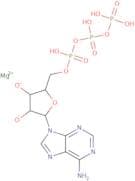
CAS 1476-84-2
:Magnesium ATP
Description:
Magnesium ATP, or magnesium adenosine triphosphate, is a crucial biochemical compound that plays a vital role in cellular energy transfer. It consists of adenosine triphosphate (ATP) complexed with magnesium ions, which are essential for stabilizing the ATP molecule and facilitating its biological functions. The presence of magnesium enhances the solubility and bioavailability of ATP, making it more effective in enzymatic reactions. Magnesium ATP is involved in various metabolic processes, including muscle contraction, nerve impulse transmission, and the synthesis of nucleic acids and proteins. It acts as a cofactor for numerous enzymes, particularly those involved in phosphorylation reactions. The compound is typically found in biological systems, where it exists in a hydrated form. Its stability and reactivity are influenced by pH and temperature, making it essential for maintaining cellular homeostasis. Overall, magnesium ATP is integral to energy metabolism and is widely studied for its implications in health and disease.
Formula:C10H16N5O13P3·Mg
InChI:InChI=1S/C10H16N5O13P3.Mg/c11-8-5-9(13-2-12-8)15(3-14-5)10-7(17)6(16)4(26-10)1-25-30(21,22)28-31(23,24)27-29(18,19)20;/h2-4,6-7,10,16-17H,1H2,(H,21,22)(H,23,24)(H2,11,12,13)(H2,18,19,20);/t4-,6-,7-,10-;/m1./s1
InChI key:InChIKey=KLHMIKHPGKEVJX-MCDZGGTQSA-N
SMILES:O[C@H]1[C@H](N2C=3C(N=C2)=C(N)N=CN3)O[C@H](COP(OP(OP(=O)(O)O)(=O)O)(=O)O)[C@H]1O.[Mg]
Synonyms:- Adenosine 5′-(tetrahydrogen triphosphate), magnesium salt (1:1)
- Adenosine triphosphate, magnesium salt
- ATP-magnesium salt
- Magnesium ATP
- Magnesium ATP salt
- See more synonyms
Sort by
Purity (%)
0
100
|
0
|
50
|
90
|
95
|
100
Found 1 products.
Adenosine 5'-(tetrahydrogen triphosphate)
CAS:Adenosine is a nucleoside consisting of adenine and ribose. It is used in biochemical analysis to quantify the cytosolic Ca2+ concentration, which is an important cellular signal that regulates many cellular processes. Adenosine stimulates the uptake of Ca2+ by binding to the monophosphate-activated protein (AMPAR), which results in the opening of voltage-gated calcium channels. These channels allow Ca2+ to enter the cell, increasing its intracellular concentration. Adenosine also has been shown to stimulate muscle contraction through increased release of Ca2+. This drug also possesses inhibitory effects on synaptic transmission and may have anti-inflammatory properties due to its ability to inhibit proteolytic enzymes in muscle cells.Formula:C10H14MgN5O13P3Purity:Min. 95%Molecular weight:529.47 g/mol