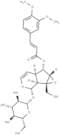
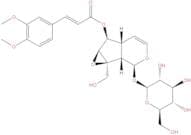
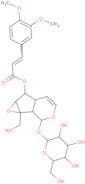
CAS 147714-71-4
:6-O-(3'',4''-Dimethoxycinnamoyl)catalpol
Description:
6-O-(3'',4''-Dimethoxycinnamoyl)catalpol is a chemical compound that belongs to the class of glycosides, specifically a derivative of catalpol, which is a natural iridoid glycoside. This compound features a cinnamoyl moiety, which contributes to its potential biological activities, including anti-inflammatory and antioxidant properties. The presence of methoxy groups on the cinnamoyl structure enhances its lipophilicity, potentially influencing its bioavailability and interaction with biological targets. The compound is characterized by its unique structural features, including the glycosidic bond linking the catalpol and the cinnamoyl group, which may affect its solubility and stability. It is often studied for its pharmacological effects, particularly in traditional medicine contexts. As with many natural products, the specific characteristics such as melting point, solubility, and spectral data would be determined through experimental methods. Overall, 6-O-(3'',4''-Dimethoxycinnamoyl)catalpol represents a compound of interest in the field of medicinal chemistry and natural product research.
Sort by
Purity (%)
0
100
|
0
|
50
|
90
|
95
|
100
Found 3 products.
6-O-(3'',4''-Dimethoxycinnamoyl)catalpol
CAS:6-O-(3'',4''-Dimethoxycinnamoyl)catalpol has anti-hepatotoxic activity.Formula:C26H32O13Purity:98%Color and Shape:SolidMolecular weight:552.5296-O-(3'',4''-Dimethoxycinnamoyl)catalpol
CAS:Formula:C26H32O13Purity:95%~99%Color and Shape:PowderMolecular weight:552.5296-o-(3'',4''-Dimethoxycinnamoyl)catalpol
CAS:6-o-(3'',4''-Dimethoxycinnamoyl)catalpol is a bioactive compound, which is derived from specific plants known for their medicinal properties. It is a specialized iridoid glycoside primarily found in the genera of the plant family Plantaginaceae. This compound exhibits its mode of action through the modulation of inflammatory pathways, potentially impacting the production and activity of pro-inflammatory cytokines and other mediators. It is thought to influence cellular signaling mechanisms that play a role in the body's inflammatory response.
Formula:C26H32O13Purity:Min. 95%Molecular weight:552.5 g/mol