CAS 14786-82-4
:4-methoxy-3-methyl-phenol
Description:
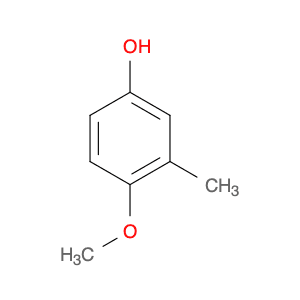
4-Methoxy-3-methyl-phenol, also known as p-cresol methyl ether, is an organic compound characterized by its aromatic structure featuring a methoxy group (-OCH3) and a methyl group (-CH3) attached to a phenolic ring. This compound typically appears as a colorless to pale yellow liquid with a characteristic odor. It is soluble in organic solvents and exhibits limited solubility in water. The presence of both the methoxy and methyl groups influences its chemical reactivity, making it a potential candidate for various chemical reactions, including alkylation and etherification. 4-Methoxy-3-methyl-phenol is often utilized in the synthesis of other organic compounds and may serve as an intermediate in the production of pharmaceuticals, agrochemicals, and fragrances. Additionally, it possesses antioxidant properties, which can be beneficial in certain applications. Safety data indicates that, like many phenolic compounds, it should be handled with care due to potential irritant effects on the skin and eyes. Proper safety measures should be observed when working with this substance in laboratory or industrial settings.
Formula:C8H10O2
InChI:InChI=1/C8H10O2/c1-6-5-7(9)3-4-8(6)10-2/h3-5,9H,1-2H3
SMILES:Cc1cc(ccc1OC)O
Synonyms:- 4-Methoxy-3-methylphenol
- Phenol, 4-methoxy-3-methyl-
- methoxy-3-methyl-phenol
- 4-methoxy-3-methyl-phenol
Sort by
Purity (%)
0
100
|
0
|
50
|
90
|
95
|
100
Found 5 products.
4-Methoxy-3-methylphenol
CAS:Controlled ProductApplications 4-Methoxy-3-methylphenol (cas# 14786-82-4) is a useful research chemical.
Formula:C8H10O2Color and Shape:NeatMolecular weight:138.164-Methoxy-3-methylphenol
CAS:4-Methoxy-3-methylphenol is a phenolic compound that is used as an intermediate in the production of other organic compounds. It has been shown to be bactericidal against Staphylococcus aureus and Salmonella typhimurium, but not against Escherichia coli. 4-Methoxy-3-methylphenol can be synthesized by hydrolysis of 3,4-dimethoxyphenol with sodium hydroxide solution. This reaction produces alkoxyphenols and oxidation products such as 4-hydroxybenzaldehyde and 4,5-dihydroxymethyl phenylcarbinol. The mass spectrometric detection of this compound can be achieved through the use of electron ionization or chemical ionization techniques.Formula:C8H10O2Purity:Min. 95%Molecular weight:138.16 g/mol