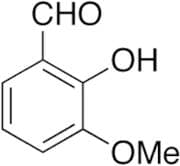
CAS 148-53-8
:o-Vanillin
Description:
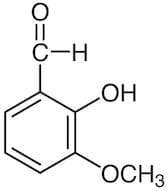
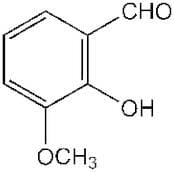
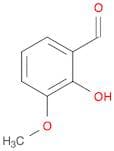
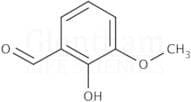
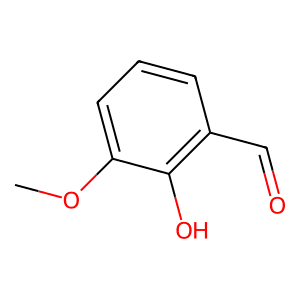
o-Vanillin, also known as 2-hydroxy-3-methoxybenzaldehyde, is an organic compound with the chemical formula C8H8O3. It is a derivative of vanillin, distinguished by the positioning of the hydroxyl and methoxy groups on the aromatic ring. This compound appears as a white to pale yellow crystalline solid and is soluble in organic solvents such as ethanol and ether, but less soluble in water. o-Vanillin exhibits a sweet, vanilla-like aroma, making it valuable in the food and fragrance industries as a flavoring agent. Additionally, it possesses antioxidant properties and has been studied for potential applications in pharmaceuticals and cosmetics. The compound can undergo various chemical reactions, including oxidation and reduction, due to the presence of both aldehyde and hydroxyl functional groups. Its unique structural features contribute to its reactivity and versatility in synthetic organic chemistry. Safety data indicate that o-Vanillin should be handled with care, as it may cause irritation upon contact with skin or eyes.
Formula:C8H8O3
InChI:InChI=1S/C8H8O3/c1-11-7-4-2-3-6(5-9)8(7)10/h2-5,10H,1H3
InChI key:InChIKey=JJVNINGBHGBWJH-UHFFFAOYSA-N
SMILES:C(=O)C1=C(O)C(OC)=CC=C1
Synonyms:- 2-Hidroxi-M-Anisaldehido
- 2-Hydroxy-3-Methoxybenzaldehyde
- 2-Hydroxy-M-Anisaldehyde
- 2-Hydroxy-m-anisaldehyd
- 2-Hydroxyl-3-methoxybenzaldehyde
- 2-Vanillin
- 3-Methoxy-2-hydroxybenzaldehyde
- 3-Methoxysalicyladehyde
- 3-Methoxysalicylaldehyde
- 6-Formyl-2-methoxyphenol
- 6-Formylguaiacol
- Benzaldehyde, 2-hydroxy-3-methoxy-
- Nc 005
- Nsc 2150
- Ortho-Vanillin
- m-Anisaldehyde, 2-hydroxy-
- o-Vaniline
- See more synonyms
Sort by
Purity (%)
0
100
|
0
|
50
|
90
|
95
|
100
Found 10 products.
o-Vanillin
CAS:Formula:C8H8O3Purity:>99.0%(GC)Color and Shape:White to Light yellow to Green powder to crystalMolecular weight:152.152-Hydroxy-3-methoxybenzaldehyde, 99%
CAS:o-Vanillin has been used to study the solvent-free reaction between o-vanillin and p-toluidine using NMR, DSC and XRD analysis. It was used in the synthesis of new ligand for Fe(III) and Al(lII). It is also used in the study of mutagenesis and as a synthetic precursor for pharmaceuticals. This ThermFormula:C8H8O3Purity:99%Color and Shape:Yellow to brown, Crystals or powder or crystalline powder or flakesMolecular weight:152.152-Hydroxy-3-Methoxybenzaldehyde
CAS:Formula:C8H8O3Purity:98%Color and Shape:SolidMolecular weight:152.1473o-Vanillin
CAS:Formula:C8H8O3Purity:≥ 98.5%Color and Shape:White to yellow powder or crystalsMolecular weight:152.153-Methoxysalicylaldehyde, 10mM (in DMSO)
CAS:3-Methoxysalicylaldehyde, 10mM (in DMSO)Purity:≥98%Molecular weight:152.15g/mol2-Hydroxy-3-methoxybenzaldehyde
CAS:2-Hydroxy-3-methoxybenzaldehydePurity:99%Color and Shape:Light Yellow Solid-CrystallineMolecular weight:152.14732g/mol3-Methoxysalicylaldehyde
CAS:3-Methoxysalicylaldehyde is a natural product.Formula:C8H8O3Purity:99.59%Color and Shape:Fibrous Light-Yellow Crystalline SolidMolecular weight:152.152-Hydroxy-3-methoxybenzaldehyde
CAS:2-Hydroxy-3-methoxybenzaldehyde is a model compound that is used to study the reaction mechanism of hydrogen bonding. It has been shown to have antioxidative properties and amoebicidal activity. The biological properties of 2-hydroxy-3-methoxybenzaldehyde are still being studied. There are also no reports on its toxicity or carcinogenicity in humans. This compound is a member of the group P2, which includes compounds with two aromatic rings connected by one carbon atom. The molecular geometry around this carbon atom is pyramidal and the molecule can exist in either an axial or equatorial orientation. Synchronous fluorescence experiments have shown that 2-hydroxymethoxybenzaldehyde reacts with Toll-like receptor 4 (TLR4).
Formula:C8H8O3Purity:Min. 95%Color and Shape:Yellow PowderMolecular weight:152.15 g/mol3-Methoxysalicylaldehyde
CAS:Formula:C8H8O3Purity:98%Color and Shape:CrystallineMolecular weight:152.149