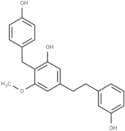
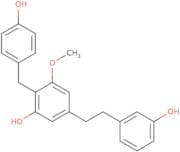
![Phenol,5-[2-(3-hydroxyphenyl)ethyl]-2-[(4-hydroxyphenyl)methyl]-3-methoxy-](/_next/image/?url=https%3A%2Fstatic.cymitquimica.com%2Fcas-image%2Fthumb-webp%2F518268-phenol-5-2-3-hydroxyphenyl-ethyl-2-4-hydroxyphenyl-methyl-3-methoxy.webp&w=3840&q=75)
CAS 148225-38-1
:Phenol,5-[2-(3-hydroxyphenyl)ethyl]-2-[(4-hydroxyphenyl)methyl]-3-methoxy-
Description:
The chemical substance known as Phenol, 5-[2-(3-hydroxyphenyl)ethyl]-2-[(4-hydroxyphenyl)methyl]-3-methoxy- is a complex organic compound characterized by its phenolic structure, which includes multiple hydroxyl groups and methoxy substituents. This compound features a central phenolic ring with various substituents that contribute to its potential biological activity and chemical reactivity. The presence of hydroxyl groups enhances its solubility in polar solvents and may impart antioxidant properties. The methoxy group can influence the compound's electronic properties and steric hindrance, affecting its interaction with biological targets. Due to its structural features, this compound may exhibit interesting pharmacological activities, making it a subject of interest in medicinal chemistry. Its CAS number, 148225-38-1, allows for precise identification and retrieval of information regarding its properties, synthesis, and applications in scientific literature. Overall, this compound exemplifies the diversity of phenolic compounds and their potential utility in various fields, including pharmaceuticals and materials science.
- Arundinin
Sort by
Purity (%)
0
100
|
0
|
50
|
90
|
95
|
100
Found 2 products.
Arundinin
CAS:Arundinin is a natural product for research related to life sciences. The catalog number is TN3457 and the CAS number is 148225-38-1.Formula:C22H22O4Purity:98%Color and Shape:SolidMolecular weight:350.41Arundinin
CAS:Arundinin is a potent anticancer agent that has been shown to induce apoptosis in cancer cells. It is a protein analog derived from Chinese medicine and has been found to inhibit several kinases, including testosterone-sensitive kinases, which are involved in the growth of prostate cancer cells. Arundinin has also been demonstrated to have anti-tumor activity in human clinical trials. This inhibitor belongs to a class of compounds known as kinase inhibitors, which are being actively investigated for their potential as novel anticancer agents. Arundinin is excreted primarily in urine and holds great promise for the treatment of various types of cancer.Formula:C22H22O4Purity:Min. 95%Molecular weight:350.4 g/mol