CAS 1483-73-4
:Iodonium, diphenyl-, bromide (1:1)
Description:
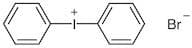
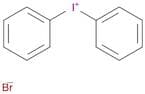
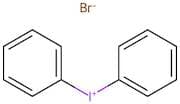
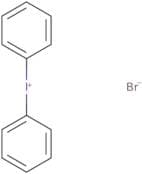
Iodonium, diphenyl-, bromide (1:1), with the CAS number 1483-73-4, is an organoiodine compound characterized by the presence of a diphenyliodonium cation paired with a bromide anion. This compound typically exhibits a stable structure due to the strong covalent bonds formed between the iodine and the phenyl groups. It is often utilized in organic synthesis, particularly in photochemical reactions and as a reagent in various electrophilic aromatic substitutions. The diphenyliodonium moiety is known for its ability to generate reactive iodine species upon decomposition, making it valuable in polymer chemistry and the development of photoresists. Additionally, this compound is sensitive to moisture and light, which can affect its stability and reactivity. As with many organoiodine compounds, safety precautions should be taken when handling it, as it may pose health risks if inhaled or ingested. Overall, diphenyliodonium bromide serves as an important tool in synthetic organic chemistry due to its unique reactivity and functional properties.
Formula:C12H10I·Br
InChI:InChI=1S/C12H10I.BrH/c1-3-7-11(8-4-1)13-12-9-5-2-6-10-12;/h1-10H;1H/q+1;/p-1
InChI key:InChIKey=LGPSGXJFQQZYMS-UHFFFAOYSA-M
SMILES:[I+](C1=CC=CC=C1)C2=CC=CC=C2.[Br-]
Synonyms:- Ai3-61738
- Bromo(Diphenyl)-Λ 3-Iodane
- Iodonium, diphenyl-, bromide
- Iodonium, diphenyl-, bromide (1:1)
- Nsc 8980
- Diphenyliodonium bromide
Sort by
Purity (%)
0
100
|
0
|
50
|
90
|
95
|
100
Found 5 products.
Diphenyliodonium Bromide
CAS:Formula:C12H10BrIPurity:>98.0%(T)(HPLC)Color and Shape:White to Light yellow to Light orange powder to crystalineMolecular weight:361.02Iodonium, diphenyl-, bromide (1:1)
CAS:Formula:C12H10BrIPurity:95%Color and Shape:SolidMolecular weight:361.0163Diphenyliodonium bromide
CAS:Diphenyliodonium bromidePurity:99%Color and Shape:White SolidMolecular weight:361.02g/molDiphenyliodonium bromide
CAS:Diphenyliodonium bromide is a chemical inhibitor that binds to the disulfide bonds of proteins by covalent modification. It can be used as an antimicrobial agent and has been shown to have no adverse effects on human serum. This drug is not active against Gram-negative bacteria, nor does it penetrate the cell membrane. Diphenyliodonium bromide reacts with thiols in proteins by forming a transient covalent bond that can be reversed by reducing agents such as glutathione reductase, cytochrome p450, or glucose-6-phosphate dehydrogenase. The mechanism of action for this drug is not well understood but may involve Toll-like receptor 4 (TLR4) activation.Formula:C12H10BrIPurity:Min. 95%Color and Shape:PowderMolecular weight:361.02 g/molDiphenyliodonium bromide
CAS:Formula:C12H10BrIPurity:95%Color and Shape:Solid, Light yellow powderMolecular weight:361.02