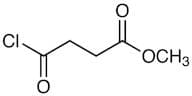
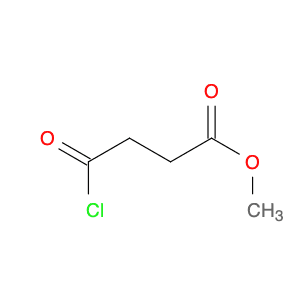
CAS 1490-25-1
:Methyl succinyl chloride
- 216-077-0
- 3-(Carbomethoxy)propionyl chloride
- 3-(Methoxycarbonyl)propanoyl chloride
- 3-(Methoxycarbonyl)propionyl chloride
- 3-Carbomethoxypropanoyl chloride
- 3-Chlorocarbonylpropionic acid methyl ester
- 4-Chloro-4-oxobutanoic acid methyl ester
- 4-Chloro-4-oxobutyric acid methyl ester
- 4-Methoxy-4-oxobutanoic acid chloride
- 4-Methoxy-4-oxobutanoyl chloride
- Butanoic acid, 4-chloro-4-oxo-, methyl ester
- Carbomethoxypropionyl chloride
- Methyl 3-(chlorocarbonyl)propanoate
- Methyl 3-(chlorocarbonyl)propionate
- Methyl 3-(chloroformyl)propionate
- Methyl 4-chloro-4-oxobutanoate
- Methyl succinate chloride
- Methyl succinate monochloride
- Methyl succinoyl chloride
- Methyl succinyl chloride
- Monomethyl succinyl chloride
- NSC 10757
- Propionic acid, 3-(chloroformyl)-, methyl ester
- Succinic acid monomethyl chloride
- β-(Methoxycarbonyl)propionyl chloride
- See more synonyms
Methyl 4-Chloro-4-oxobutyrate
CAS:Formula:C5H7ClO3Purity:>95.0%(GC)Color and Shape:Colorless to Almost colorless clear liquidMolecular weight:150.56Methyl 4-chloro-4-oxobutanoate
CAS:Formula:C5H7ClO3Purity:95%Color and Shape:LiquidMolecular weight:150.5603Methyl 4-chloro-4-oxobutanoate
CAS:Methyl 4-chloro-4-oxobutanoatePurity:95%Color and Shape:Pale Yellow LiquidMolecular weight:150.56g/molmethyl 4-chloro-4-oxobutanoate
CAS:Formula:C5H7ClO3Purity:95% GCColor and Shape:LiquidMolecular weight:150.56Methyl 4-chloro-4-oxobutanoate
CAS:Methyl 4-chloro-4-oxobutanoate is a chemical compound that is used as a medicine. It has been shown to have an affinity for the human immunodeficiency virus (HIV) and can be used to treat HIV infection. Methyl 4-chloro-4-oxobutanoate is also used in other types of medicines, such as those for treating high blood pressure and heart disease. This chemical binds to the receptors on cells that are responsible for regulating blood pressure and heart rate, which leads to inhibition of cyclic guanosine monophosphate (cGMP) production. Methyl 4-chloro-4-oxobutanoate inhibits the activity of lipolytic enzymes, which break down fats into smaller units, by binding at the active site of these enzymes. It also binds to chloride ions and prevents them from being released from cells, which causes a rise in intracellular chloride levels. This increase in chloride
Formula:C5H7ClO3Purity:Min. 95%Color and Shape:Clear LiquidMolecular weight:150.56 g/mol