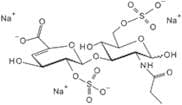
CAS 149368-05-8
:heparin disaccharide I-P, sodium salt
Description:
Heparin disaccharide I-P, sodium salt, is a glycosaminoglycan derivative that plays a significant role in anticoagulation and cellular signaling. This compound is characterized by its structure, which consists of repeating disaccharide units that include uronic acid and amino sugars, contributing to its negative charge and biological activity. As a sodium salt, it is soluble in water, making it suitable for various pharmaceutical applications. Heparin disaccharide I-P is often used in research and therapeutic contexts, particularly in studies related to blood coagulation and vascular biology. Its anticoagulant properties stem from its ability to enhance the activity of antithrombin III, a key regulator of blood clotting. Additionally, this compound may exhibit interactions with various proteins, influencing cell behavior and signaling pathways. Overall, heparin disaccharide I-P, sodium salt, is a valuable substance in both clinical and research settings, owing to its unique biochemical properties and functional versatility.
Sort by
Purity (%)
0
100
|
0
|
50
|
90
|
95
|
100
Found 1 products.
Heparin disaccharide I-P trisodium salt
CAS:Heparin disaccharide I-P trisodium salt is a synthetic, highly pure, custom-synthesized heparin derivative with a unique sequence of saccharides. It has been fluorinated and methylated to increase its stability and resistance to degradation by enzymes. Heparin disaccharide I-P trisodium salt is glycosylated, which increases its solubility in water and reduces the risk of precipitation. This product is also modified using click chemistry to introduce an oligosaccharide at one end of the molecule.Formula:C15H20NO17S2Na3Purity:Min. 95%Color and Shape:White To Off-White SolidMolecular weight:619.42 g/mol