CAS 14984-39-5
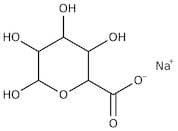
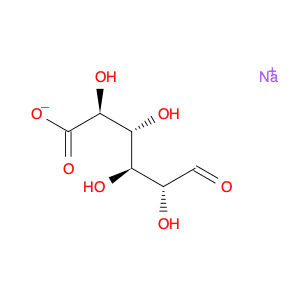
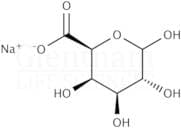
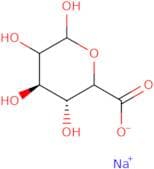
:D-(+)-Galacturonic acid sodium salt
Description:
D-(+)-Galacturonic acid sodium salt, with the CAS number 14984-39-5, is a sodium salt derivative of galacturonic acid, a naturally occurring uronic acid found in pectin, which is a structural polysaccharide in plant cell walls. This compound is typically white to off-white in appearance and is soluble in water, making it useful in various applications, particularly in the food and pharmaceutical industries. It exhibits properties such as thickening, gelling, and stabilizing, which are beneficial in food processing and formulation. D-(+)-Galacturonic acid sodium salt is also known for its potential health benefits, including its role as a dietary fiber and its ability to support gut health. In biochemical contexts, it can participate in various metabolic pathways and is often studied for its interactions with other biomolecules. Its safety profile is generally favorable, but like any chemical substance, it should be handled according to safety guidelines to avoid any adverse effects.
Formula:C6H9NaO7
InChI:InChI=1/C6H10O7.Na/c7-1-2(8)4(5(10)11)13-6(12)3(1)9;/h1-4,6-9,12H,(H,10,11);/q;+1/p-1/t1-,2+,3+,4-,6?;/m0./s1
SMILES:C1(C(C(C(=O)O)OC(C1O)O)O)O.[Na]
Synonyms:- sodium (2S,3R,4S,5R)-3,4,5,6-tetrahydroxytetrahydro-2H-pyran-2-carboxylate (non-preferred name)
Sort by
Purity (%)
0
100
|
0
|
50
|
90
|
95
|
100
Found 4 products.
Sodium galacturonate anhydrous, 98%
CAS:This Thermo Scientific Chemicals brand product was originally part of the Alfa Aesar product portfolio. Some documentation and label information may refer to the legacy brand. The original Alfa Aesar product / item code or SKU reference has not changed as a part of the brand transition to Thermo SciFormula:C6H9NaO7Purity:98%Molecular weight:216.12D-Galacturonic acid, sodium salt (1:1)
CAS:Formula:C6H9NaO7Purity:98%Color and Shape:SolidMolecular weight:216.1212D-Galacturonic acid sodium
CAS:D-Galacturonic acid sodium salt is a salt form of D-galacturonic acid. It is an extract from seaweed and has been shown to have the ability to be absorbed in the intestines. This compound can be used as a diagnostic tool, such as for detecting strontium or radioactive isotopes in urine samples. The esters of this compound have been shown to have chelating activity and may be useful as reagents in analytical chemistry.
Formula:C6H10O7•NaPurity:Min. 95%Color and Shape:PowderMolecular weight:217.13 g/mol