CAS 150-76-5
:Phenol, 4-methoxy-
Description:
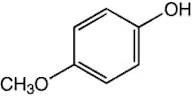
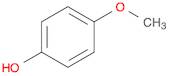
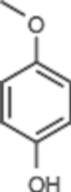
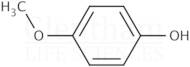
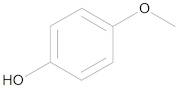
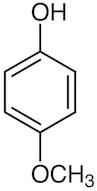
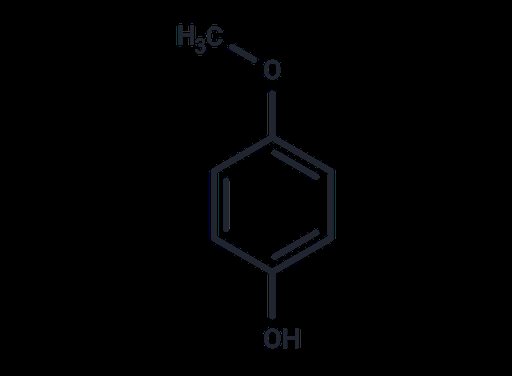
Phenol, 4-methoxy- (also known as p-methoxyphenol or anisole) is an organic compound characterized by a methoxy group (-OCH₃) attached to the para position of a phenolic ring. It appears as a colorless to pale yellow liquid with a sweet, aromatic odor. This compound is soluble in organic solvents and exhibits limited solubility in water due to its hydrophobic nature. It is known for its antioxidant properties and is often used as a reagent in organic synthesis, particularly in the production of various pharmaceuticals and agrochemicals. Additionally, 4-methoxyphenol can act as a stabilizer in polymer formulations and is utilized in the cosmetic industry for its fragrance and preservative qualities. The compound is also recognized for its potential biological activities, including antimicrobial and anti-inflammatory effects. However, like many phenolic compounds, it should be handled with care due to potential toxicity and environmental concerns.
Formula:C7H8O2
InChI:InChI=1/C7H8O2/c8-6-9-7-4-2-1-3-5-7/h1-5,8H,6H2
InChI key:InChIKey=NWVVVBRKAWDGAB-UHFFFAOYSA-N
SMILES:O(C)C1=CC=C(O)C=C1
Synonyms:- 1-Hydroxy-4-methoxybenzene
- 4-Hydroxyanisole
- 4-Hydroxyphenyl methyl ether
- 4-Methoxyphenol
- 4-Mp
- Benzene, 1-Methoxy-4-Hydroxy-
- Bms 181158
- Hq-Mme
- Hqmme
- Hydrochinon-Monomethylaether
- Hydroquinone methyl ether
- Hydroquinone monomethyl ether
- Hydroxyquinone methyl ether
- Leucobasal
- Leucodine B
- Mechinolum
- Mehq
- Mequinol
- Methoquinone
- Mq-F
- Novo-Dermoquinona
- Nsc 4960
- P-Methoxyphenol
- PMF (antioxidant)
- Phenol, p-methoxy-
- Poea 15
- p-Guaiacol
- p-Hydroxyanisol
- p-Hydroxyanisole
- p-Hydroxymethoxybenzene
- p-Hydroxyphenyl methyl ether
- 4-Hydroxy Anisole
- 1-Hyroxy-4-methoxy benzene
- phenoxymethanol
- Phenol, 4-methoxy-
- 4-mehtoxyphenol
- 4-Hydroxy anisol
- 4-Methoxy phenol
- 4-Methoxyphenol (Hydroquinone monomethyl ether)
- Hydrochinon monomethylether
- benzene-1,4-diol - methoxymethane (1:1)
- METHOXYPHENOL(P-)
- MONOMETHYLHYDROQUINONE
- 4-methoxy-pheno
- HYDROXYANISOLE-4
- O-Methylhydroquinone
- METHOXYPHENOL, PARA-
- Eastman HQMME
- See more synonyms
Sort by
Purity (%)
0
100
|
0
|
50
|
90
|
95
|
100
4-Methoxyphenol, 98+%
CAS:4-Methoxyphenol is an active ingredient and used in dermatology. It is employed as a pharmaceutical drug in skin depigmentation. It is used as polymerization inhibitors. For example, in the radical polymerization of acryaltes and styrene monomers. It is also used as an intermediate in the preparatiFormula:C7H8O2Purity:98+%Color and Shape:White to cream to pale yellow, Crystals or powder or crystalline powder or flakesMolecular weight:124.144-Methoxyphenol
CAS:4-MethoxyphenolFormula:C7H8O2Purity:98%Color and Shape:SolidMolecular weight:124.13721Mequinol, 10mM (in DMSO)
CAS:Mequinol, 10mM (in DMSO)Formula:C7H8O2Purity:≥98%, 10 mM in DMSOMolecular weight:124.14Mequinol
CAS:Mequinol (Leucobasal) is a derivate of hydroquinone and depigmenting agent. Mequinol acts by oxidising tyrosinase in melanocytes to produce cytotoxic products.Formula:C7H8O2Purity:99.51% - 99.96%Color and Shape:Coulourless To Pale Yellow Solid FlakesMolecular weight:124.144-Methoxyphenol
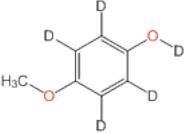
CAS:Formula:C7H8O2Purity:(GC) ≥ 99.0%Color and Shape:White crystals or crystalline powderMolecular weight:124.144-Methoxyphenol-2,3,5,6-d4,OD
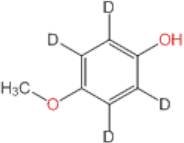
CAS:Formula:CH3OC6D4ODPurity:98 atom % DColor and Shape:White SolidMolecular weight:129.083814-Methoxyphenol-2,3,5,6-d4
CAS:Formula:CH3OC6D4OHPurity:98 atom % DColor and Shape:White SolidMolecular weight:128.077544-Methoxyphenol
CAS:Formula:C7H8O2Purity:>99.0%(GC)Color and Shape:White to Light yellow to Light orange powder to crystalMolecular weight:124.14Mequinol (Standard)
CAS:Mequinol (Standard) is the standard substance of Mequinol, and it is applicable for quantitative analysis, quality control, and related research in biochemical experiments. Mequinol (Leucobasal) is a synthetic derivate of hydroquinone and depigmenting agent. Although the exact mechanism of the depigmenting effects of mequinol remains unclear, it may exert its effect by oxidation of tyrosinase to cytotoxic products in melanocytes.Formula:C7H8O2Color and Shape:SolidMolecular weight:124.144-Methoxyphenol
CAS:Formula:C7H8O2Purity:98.0%Color and Shape:Solid, Off-white crystalline flakesMolecular weight:124.1394-Hydroxyanisole
CAS:Controlled ProductApplications 4-Hydroxyanisole (cas# 150-76-5) is a compound useful in organic synthesis.
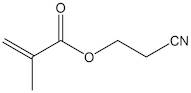
Formula:C7H8O2Color and Shape:NeatMolecular weight:124.14BIMAX® 2-CEMA
CAS:Formula:C7H9NO2Color and Shape:Colorless To Light Yellow LiquidMolecular weight:139.15