CAS 15032-21-0
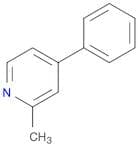
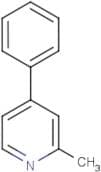
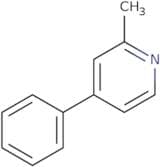
:2-METHYL-4-PHENYLPYRIDINE
Description:
2-Methyl-4-phenylpyridine is an organic compound characterized by its pyridine ring structure, which is a six-membered aromatic ring containing one nitrogen atom. This compound features a methyl group and a phenyl group attached to the pyridine ring, contributing to its unique chemical properties. It is typically a yellowish to brown liquid or solid, depending on the temperature and purity. 2-Methyl-4-phenylpyridine is known for its role in various chemical reactions and as an intermediate in the synthesis of pharmaceuticals and agrochemicals. It exhibits moderate solubility in organic solvents and is relatively stable under standard conditions. The presence of both the methyl and phenyl substituents can influence its reactivity, making it a subject of interest in studies related to organic synthesis and medicinal chemistry. Additionally, it may exhibit biological activity, which warrants further investigation into its potential applications in drug development. Safety data should be consulted for handling and exposure guidelines, as with any chemical substance.
Formula:C12H11N
InChI:InChI=1/C12H11N/c1-10-9-12(7-8-13-10)11-5-3-2-4-6-11/h2-9H,1H3
SMILES:Cc1cc(ccn1)c1ccccc1
Synonyms:- 4-Phenyl-2-Picoline
Sort by
Purity (%)
0
100
|
0
|
50
|
90
|
95
|
100
Found 3 products.
2-Methyl-4-phenylpyridine
CAS:2-Methyl-4-phenylpyridine is a cationic surfactant that has been shown to be effective in treating Parkinson's disease. 2-Methyl-4-phenylpyridine was found to have light emission properties, which may be related to the protein kinase C (PKC) signaling pathway. PKC phosphorylates a number of proteins, including dopamine D1 receptor and voltage gated potassium channels, leading to changes in cellular physiology. The uptake of 2-methyl-4-phenylpyridine into cells is mediated by the sodium/potassium ATPase pump. This drug has also been shown to inhibit active oxygen species production and decrease the levels of striatal dopamine in experimental models of Parkinson's disease. Clinical studies have shown that this drug can improve motor symptoms in patients with Parkinson's disease.Formula:C12H11NPurity:Min. 95%Molecular weight:169.22 g/mol