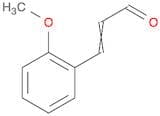
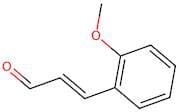
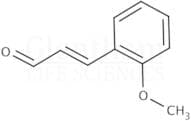
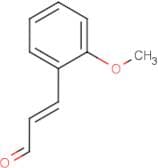
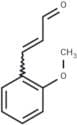
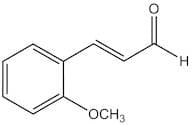
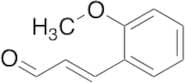
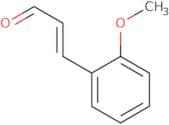
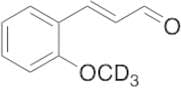
CAS 1504-74-1
:2-Methoxycinnamaldehyde
- (2E)-3-(2-methoxyphenyl)prop-2-enal
- 2-Methoxycinnamaldehyde
- 2-Propenal, 3-(2-methoxyphenyl)-
- 3-(2-Methoxyphenyl)-2-Propenal
- 3-(2-Methoxyphenyl)Prop-2-Enal
- 3-(2-Methoxyphenyl)acrylaldehyde
- 3-(2-Methoxyphenyl)propenal
- Beta-(O-Methoxyphenyl)Acrolein
- Cinnamaldehyde, o-methoxy-
- Heliopan
- NSC 114599
- O-Methoxycinnamic Aldehyde
- See more synonyms
2-Propenal, 3-(2-methoxyphenyl)-
CAS:Formula:C10H10O2Purity:98%Color and Shape:SolidMolecular weight:162.18522-Methoxycinnamaldehyde
CAS:Formula:C10H10O2Purity:≥ 96%Color and Shape:Off-white to yellow powder, crystals or solidMolecular weight:162.192-Methoxycinnamaldehyde
CAS:2-MethoxycinnamaldehydeFormula:C10H10O2Purity:99%Color and Shape: faint yellow to light yellow crystalline powderMolecular weight:162.19g/mol2-methoxycinnamaldehyde
CAS:2-methoxycinnamaldehyde is a natural compound of Cinnamomum cassia,has been widely studied with regard to its antitumor activity.Formula:C10H10O2Purity:98%Color and Shape:Physical Description Yellow Crystals (Ntp 1992)Molecular weight:162.192-methoxycinnamaldehyde
CAS:Aldehyde etherFormula:C10H10O2Purity:≥ 98.0 % (HPLC)Color and Shape:CrystalsMolecular weight:162.193-(2-Methoxyphenyl)acrylaldehyde
CAS:Controlled ProductApplications 3-(2-Methoxyphenyl)acrylaldehyde (cas# 1504-74-1) is a useful research chemical.
Formula:C10H10O2Color and Shape:NeatMolecular weight:162.192-Methoxycinnamaldehyde
CAS:2-Methoxycinnamaldehyde is a naturally occurring organic chemical that can be found in the bark of cinnamon trees as well as in other plants such as cassia and anise. 2-Methoxycinnamaldehyde has been shown to have genotoxic activity, which may lead to carcinogenesis. This compound is metabolized by cytochrome P450 enzymes and can bind to DNA, forming covalent adducts with guanine bases. The binding of 2-methoxycinnamaldehyde to DNA leads to a decrease in mitochondrial membrane potential, altering the permeability of the cell membrane. This compound also inhibits HIV infection and colorectal adenocarcinoma cells in vitro assays. 2-Methoxycinnamaldehyde can be analyzed using high performance liquid chromatography (HPLC) methods with UV detection at 214 nm or by solid phase microextraction followed by HPLC analysis. It reacts with acid under basic conditions
Formula:C10H10O2Purity:Min. 96 Area-%Color and Shape:Slightly Yellow PowderMolecular weight:162.19 g/mol2-Methoxycinnamaldehyde-d3
CAS:Controlled ProductFormula:C10D3H7O2Color and Shape:NeatMolecular weight:165.204