CAS 151151-29-0
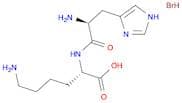
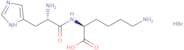
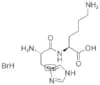
:his-lys hydrobromide
Description:
His-Lys hydrobromide, also known as histidyl-lysine hydrobromide, is a dipeptide derivative formed from the amino acids histidine and lysine. It is characterized by its hydrobromide salt form, which enhances its solubility in aqueous solutions, making it useful in various biochemical applications. This compound typically exhibits properties associated with peptides, such as being a white to off-white crystalline powder. It is generally soluble in water and may have limited solubility in organic solvents. His-Lys hydrobromide can play a role in biological processes, particularly in protein synthesis and enzyme activity, due to the presence of the basic amino acids. Additionally, it may be utilized in research settings, including studies on peptide interactions, drug design, and as a potential therapeutic agent. As with many peptides, it is important to handle it with care, considering stability and storage conditions to maintain its integrity for experimental use.
Formula:C12H21N5O3.HBr
Synonyms:- H-His-Lys-OH . HBr
Sort by
Purity (%)
0
100
|
0
|
50
|
90
|
95
|
100
Found 4 products.
H-His-Lys-OH · HBr
CAS:A metabolite of GHK observed in rat plasma.Formula:C12H21N5O3·HBrPurity:> 98%Color and Shape:White PowderMolecular weight:364.24L-Histidyl-L-lysine hydrobromide
CAS:L-Histidyl-L-lysine hydrobromidePurity:95%Molecular weight:364.24g/molH-His-Lys-OH·HBr
CAS:Please enquire for more information about H-His-Lys-OH·HBr including the price, delivery time and more detailed product information at the technical inquiry form on this pageFormula:C12H21N5O3·HBrPurity:Min. 95%Molecular weight:364.24 g/mol