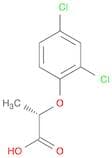
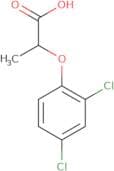
CAS 15165-69-2
:(2S)-2-(2,4-dichlorophenoxy)propanoic acid
- (-)-2,4-Dp
- (-)-2-(2,4-Dichlorophenoxy)propanoic acid
- (-)-2-(2,4-Dichlorophenoxy)propionic acid
- (-)-Dichlorprop
- (S)-(-)-2-(2,4-Dichlorophenoxy)propionic acid
- (S)-2-(2,4-Dichlorophenoxy)propanoic acid
- (S)-Dichloroprop
- (S)-Dichlorprop
- Propanoic acid, 2-(2,4-dichlorophenoxy)-, (2S)-
- Propanoic acid, 2-(2,4-dichlorophenoxy)-, (S)-
- Propionic acid, 2-(2,4-dichlorophenoxy)-, (-)-
- (2S)-2-(2,4-Dichlorophenoxy)propanoic acid
- (S)-DCPP
- See more synonyms
(2S)-2-(2,4-Dichlorophenoxy)propanoic acid
CAS:The herbicide 2,4-dichlorophenoxyacetic acid (2,4-D) is a broad-spectrum herbicide that inhibits plant growth by interfering with the plant’s ability to produce proteins. It is also used as an analytical method for determining the concentration of 2,4-D in water and soil. The extraction process relies on dispersive solid-phase extraction (DSPE), which uses a polymer resin as a stationary phase to bind the target compound. Fluorescence spectrometry is then used to determine the amount of 2,4-D in the sample. This target compound has been shown to inhibit chymotrypsin and carboxypeptidase enzymes at concentrations of up to 1 mM. These enzymes are involved in protein synthesis and breakdown, respectively. The stability of this compound under various conditions has been determined through chemical tests and model systems involving plants and bacteria.
Formula:C9H8Cl2O3Purity:Min. 95%Color and Shape:PowderMolecular weight:235.06 g/mol