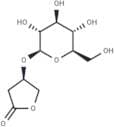
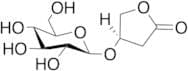
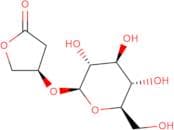
CAS 151870-74-5
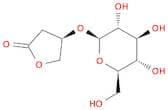
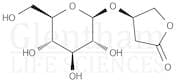
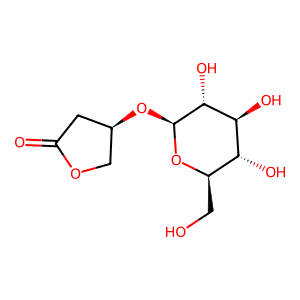
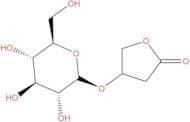
:Kinsenoside
Description:
Kinsenoside is a natural compound classified as a glycoside, primarily derived from the plant species *Ophiopogon japonicus*. It is known for its potential pharmacological properties, including anti-inflammatory, antioxidant, and neuroprotective effects. Kinsenoside exhibits a unique chemical structure characterized by a sugar moiety linked to a phenolic aglycone, which contributes to its biological activity. The compound has garnered interest in the field of traditional medicine and modern pharmacology due to its ability to modulate various signaling pathways, potentially offering therapeutic benefits in conditions such as neurodegenerative diseases and metabolic disorders. Additionally, kinsenoside is being studied for its effects on cellular processes, including apoptosis and oxidative stress response. Its safety profile and efficacy are subjects of ongoing research, making it a compound of interest in both natural product chemistry and drug development. As with many bioactive compounds, further studies are necessary to fully elucidate its mechanisms of action and potential clinical applications.
Formula:C10H16O8
InChI:InChI=1S/C10H16O8/c11-2-5-7(13)8(14)9(15)10(18-5)17-4-1-6(12)16-3-4/h4-5,7-11,13-15H,1-3H2/t4-,5-,7-,8+,9-,10-/m1/s1
InChI key:InChIKey=MQEPWBMWFIVRPS-ZGSHZZHUSA-N
SMILES:O([C@@H]1O[C@H](CO)[C@@H](O)[C@H](O)[C@H]1O)[C@@H]2CC(=O)OC2
Synonyms:- (+)-Kinsenoside
- (4R)-4-(β-<span class="text-smallcaps">D</span>-Glucopyranosyloxy)dihydro-2(3H)-furanone
- 2(3H)-Furanone, 4-(β-<span class="text-smallcaps">D</span>-glucopyranosyloxy)dihydro-, (4R)-
- 2(3H)-Furanone, 4-(β-<span class="text-smallcaps">D</span>-glucopyranosyloxy)dihydro-, (R)-
- 2(3H)-Furanone,4-(b-D-glucopyranosyloxy)dihydro-,(R)-
- 2(3H)-Furanone, 4-(β-D-glucopyranosyloxy)dihydro-, (4R)-
- (4R)-4-(β-D-Glucopyranosyloxy)dihydro-2(3H)-furanone
Sort by
Purity (%)
0
100
|
0
|
50
|
90
|
95
|
100
Found 7 products.
Kinsenoside
CAS:Kinsenoside shows significant antihepatotoxic, and anti-inflammatory activities. Kinsenoside could be useful for repairing beta cells in pancreatic islet injury as well as improving its function, it could promote the glucose tolerance of acute glucose increase in both diabetic and normal healthy rats. Kinsenoside inhibits osteoclastogenesis from macrophages by attenuating RANKL-induced NF-κB and NFATc1 activities, which in turn, prevents bone loss from OVX mice.Formula:C10H16O8Purity:95%~99%Molecular weight:264.23Kinsenoside
CAS:Kinsenoside ((+)-Kinsenoside) shows significant antihepatotoxic, and anti-inflammatory activities.Formula:C10H16O8Purity:99.2% - 99.92%Color and Shape:SolidMolecular weight:264.23Kinsenoside
CAS:Kinsenoside is a hepatoprotective agent that has been shown to have significant cytotoxicity against human cancer cells, and to inhibit the production of chemoattractant protein. Kinsenoside also has an anti-inflammatory effect, which is due to its ability to stimulate the production of IL-10, a cytokine that inhibits inflammation. Kinsenoside has been shown to have drug interactions with other drugs such as diclofenac and warfarin. This compound also interacts with Toll-like receptor 4 (TLR4), which is involved in inflammatory responses. The activity of this drug can be determined using a surface methodology on human erythrocytes.Formula:C10H16O8Purity:Min. 95%Color and Shape:SolidMolecular weight:264.23 g/mol