CAS 151878-23-8
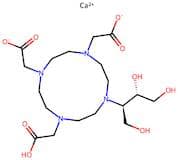
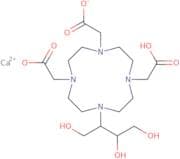
:calcium 2,2'-[7-(carboxymethyl)-10-(1,3,4-trihydroxybutan-2-yl)-1,4,7,10-tetraazacyclododecane-1,4-diyl]diacetate
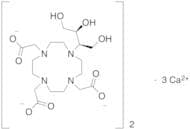
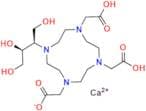
rel-10-[(1R,2S)-2,3-Dihydroxy-1-(hydroxymethyl)propyl]-1,4,7,10-tetraazacyclododecane-1,4,7-triacetic acid, calcium salt
CAS:Formula:C18H32CaN4O9Purity:98%Color and Shape:SolidMolecular weight:488.5461rel-Calcium 2,2'-(7-(carboxymethyl)-10-((2R,3S)-1,3,4-trihydroxybutan-2-yl)-1,4,7,10-tetraazacyclododecane-1,4-diyl)diacetate
CAS:rel-Calcium 2,2'-(7-(carboxymethyl)-10-((2R,3S)-1,3,4-trihydroxybutan-2-yl)-1,4,7,10-tetraazacyclododecane-1,4-diyl)diacetatePurity:98%Molecular weight:488.55g/molCalcobutrol
CAS:Controlled ProductStability Hygroscopic
Applications Calcobutrol, is a new macrocyclic polyhydroxylated gadolinium chelate derivative which can be used as a contrast agentfor Magnetic Resonance Imaging (MRI).
References Platzek, J. et al.: Inorg. Chem., 36, 6086 (1997);Formula:C18H32CaN4O9Color and Shape:NeatMolecular weight:488.55Calcobutrol
CAS:Calcobutrol is a calcium salt that is the byproduct of the reaction between phosphoric acid and calcium carbonate. It has been crystallised as an acidic calcium phosphate salt. Calcobutrol has a molecular weight of 210.13 g/mol and a melting point of 240°C. The compound is insoluble in water, but can be dissolved in dilute acids or alkalis. Calcobutrol has shown to have a ligand affinity for gadolinium (Gd3+), which may be due to its ability to bind with phosphate ions and sodium ions.
Calcobutrol diffracts X-rays with a wavelength of 0.154 nm, which corresponds to its crystal lattice spacing of 0.154 nm, and has been used as a standard for this type of diffraction in studies on Gd3+.Formula:C36H62Ca3N8O18Purity:Min. 95%Color and Shape:PowderMolecular weight:1,015.15 g/mol
![rel-10-[(1R,2S)-2,3-Dihydroxy-1-(hydroxymethyl)propyl]-1,4,7,10-tetraazacyclododecane-1,4,7-triace…](/_next/image/?url=https%3A%2Fstatic.cymitquimica.com%2Fproducts%2FIN%2Fthumb%2FDA007DVS.jpg&w=3840&q=75)