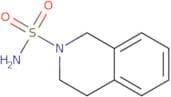
CAS 15211-62-8
:2(1H)-Isoquinolinesulfonamide, 3,4-dihydro-
Description:
2(1H)-Isoquinolinesulfonamide, 3,4-dihydro- is a chemical compound characterized by its isoquinoline structure, which features a bicyclic aromatic system. This compound contains a sulfonamide functional group, which is known for its ability to form hydrogen bonds and participate in various chemical reactions. The presence of the dihydro group indicates that the compound has two hydrogen atoms added to the isoquinoline ring, resulting in a saturated structure that can influence its reactivity and biological activity. Typically, compounds of this nature may exhibit pharmacological properties, making them of interest in medicinal chemistry. The sulfonamide moiety is often associated with antibacterial activity, although the specific biological effects of this compound would depend on its precise structure and substituents. Additionally, the compound may be soluble in polar solvents, and its stability can be influenced by environmental factors such as pH and temperature. Overall, 2(1H)-Isoquinolinesulfonamide, 3,4-dihydro- represents a unique class of organic compounds with potential applications in various fields, including pharmaceuticals and materials science.
Formula:C9H12N2O2S
Sort by
Purity (%)
0
100
|
0
|
50
|
90
|
95
|
100
Found 1 products.
1,2,3,4-Tetrahydroisoquinoline-2-sulfonamide
CAS:1,2,3,4-Tetrahydroisoquinoline-2-sulfonamide is an antibacterial drug that inhibits bacterial growth by the formation of a hydrogen bond with the amide group of the bacteria's cell wall. The hydrogen bonds are formed between intermolecular oxygen atoms and the sulfonamide nitrogens in 1,2,3,4-tetrahydroisoquinoline-2-sulfonamide. This antibacterial drug has been shown to be active against β-cyclodextrin as well as penicillin resistant strains of Staphylococcus aureus. Molecular modeling studies have shown that this drug interacts with the protein cytochrome bc1 complex and inhibits its activity by binding to a specific region on the protein. These interactions were confirmed experimentally using molecular modeling software and parameters such as molecular weight and shape.Formula:C9H12N2O2SPurity:Min. 95%Molecular weight:212.27 g/mol