CAS 15217-42-2
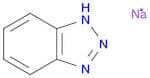
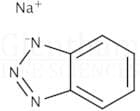
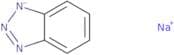
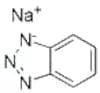
:Sodium benzotriazole
Description:
Sodium benzotriazole, with the CAS number 15217-42-2, is a chemical compound that serves primarily as a corrosion inhibitor and a stabilizer for various applications, particularly in the field of metalworking and water treatment. It is a sodium salt of benzotriazole, which is a heterocyclic compound featuring a triazole ring fused to a benzene ring. This compound is typically characterized by its solubility in water, making it effective in aqueous environments. Sodium benzotriazole exhibits excellent UV-absorbing properties, which makes it valuable in protecting materials from photodegradation. Additionally, it has applications in the formulation of antifreeze and as a component in certain types of coatings and plastics. The compound is generally considered to have low toxicity, but like many chemicals, it should be handled with care to avoid environmental contamination. Its effectiveness as a corrosion inhibitor is attributed to its ability to form a protective layer on metal surfaces, thereby reducing oxidation and prolonging the lifespan of metal components.
Formula:C6H5N3·Na
InChI:InChI=1S/C6H5N3.Na/c1-2-4-6-5(3-1)7-9-8-6;/h1-4H,(H,7,8,9);
InChI key:InChIKey=BMOKHTQIBPRXSL-UHFFFAOYSA-N
SMILES:C1=2C(N=NN1)=CC=CC2.[Na]
Synonyms:- 1,2,3-Benzotriazole sodium salt
- 1H-Benzotriazole, sodium salt
- 1H-Benzotriazole, sodium salt (1:1)
- Benzotriazole, sodium salt
- Bta-S
- Sodium 1,2,3-Benzotriazole
- Sodium Benzotriazol-2-Ide
- Sodium Benzotriazole(BTA-S)
- Sodium benzotriazolate
- Wintrol B 40NA
Sort by
Purity (%)
0
100
|
0
|
50
|
90
|
95
|
100
Found 4 products.
Sodiumbenzotriazole
CAS:Sodiumbenzotriazole is an organic compound with the chemical formula C6H4N3Na. Sodiumbenzotriazolate has been shown to be active against infectious diseases caused by bacteria, such as Streptococcus pyogenes and Neisseria meningitidis. It also has been shown to have anti-inflammatory properties in mice with collagen-induced arthritis, as well as inhibitory effects on inflammatory diseases such as Crohn's disease and colitis. The mechanism of action for these effects may be due to its ability to act as a metal chelator and scavenger of reactive oxygen species.
Formula:C6H4N3NaPurity:Min. 95%Color and Shape:Clear LiquidMolecular weight:141.11 g/mol