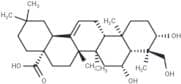
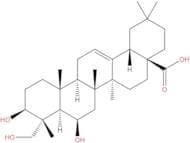
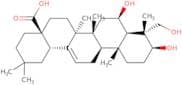
CAS 152243-70-4
:Olean-12-en-28-oicacid, 3,6,23-trihydroxy-, (3b,4a,6b)-
Description:
Olean-12-en-28-oic acid, 3,6,23-trihydroxy-, (3b,4a,6b)-, commonly referred to as oleanolic acid, is a triterpenoid compound characterized by its complex structure featuring multiple hydroxyl groups. This compound is derived from the oleanane family of triterpenes and is known for its various biological activities, including anti-inflammatory, antioxidant, and hepatoprotective effects. The presence of hydroxyl groups contributes to its solubility in polar solvents and enhances its reactivity, allowing it to interact with various biological targets. Oleanolic acid is often studied for its potential therapeutic applications, particularly in the context of metabolic disorders and liver health. Additionally, it is found in several plants, including olives and various medicinal herbs, which contribute to its traditional use in herbal medicine. Its structural configuration, particularly the stereochemistry at specific carbon centers, plays a crucial role in its biological activity and interaction with cellular pathways. Overall, oleanolic acid is a significant compound in both natural product chemistry and pharmacology.
Formula:C30H48O5
Synonyms:- 3b,6b,23-Trihydroxyolean-12-en-28-oic acid
Sort by
Purity (%)
0
100
|
0
|
50
|
90
|
95
|
100
Found 4 products.
Uncargenin C
CAS:Uncargenin C is a natural product from Turpinia arguta.Formula:C30H48O5Purity:98%Color and Shape:SolidMolecular weight:488.709Uncargenin C
CAS:Controlled Product<p>Uncargenin C is a polyhydroxylated natural product that is synthesized from oleanolic acid. It has been shown to possess anti-leukemic activity in vitro and in vivo. In addition, Uncargenin C has been shown to inhibit the synthesis of leukotrienes, prostaglandins and thromboxanes, which are inflammatory mediators involved in the development of asthma and arthritis. The compound also inhibits the expression of vascular cell adhesion molecule 1 (VCAM-1), which plays a key role in atherosclerosis. Uncargenin C is not bioavailable as it cannot be absorbed through the gut wall or skin and must be administered intravenously. The compound is a potential feedstock for production of other compounds with biological activity, such as drugs or natural products, due to its hydroxylated nature.</p>Purity:Min. 95%