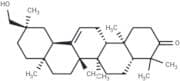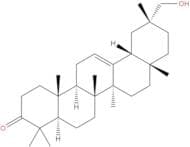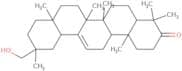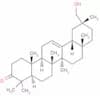
CAS 152253-67-3
:mupinensisone
Description:
Mupinensisone, identified by its CAS number 152253-67-3, is a chemical compound that belongs to the class of natural products. It is primarily derived from certain plant sources and is known for its potential biological activities. The compound typically exhibits a complex molecular structure, which contributes to its unique properties. Mupinensisone has garnered interest in the field of medicinal chemistry due to its possible applications in pharmacology, including anti-inflammatory and antimicrobial effects. Its mechanism of action may involve interactions with specific biological targets, although detailed studies are necessary to fully elucidate these pathways. Additionally, the compound's solubility, stability, and reactivity can vary depending on environmental conditions and the presence of other substances. As with many natural products, mupinensisone's characteristics may also include a range of stereoisomers, which can influence its biological activity. Further research is essential to explore its full potential and to assess its safety and efficacy in various applications.
Formula:C30H48O2
InChI:InChI=1/C30H48O2/c1-25(2)22-10-13-30(7)23(28(22,5)12-11-24(25)32)9-8-20-21-18-26(3,19-31)14-15-27(21,4)16-17-29(20,30)6/h8,21-23,31H,9-19H2,1-7H3/t21-,22-,23+,26+,27+,28-,29+,30+/m0/s1
Synonyms:- Olean-3-oxo-29-ol
- Olean-12-en-3-one, 29-hydroxy-, (20alpha)-
- 29-Hydroxyolean-12-En-3-One
- Mupinensisone
Sort by
Purity (%)
0
100
|
0
|
50
|
90
|
95
|
100
Found 3 products.
Mupinensisone
CAS:Mupinensisone is a natural product of Celastrus, Celastraceae.
Formula:C30H48O2Purity:98%Color and Shape:SolidMolecular weight:440.712Mupinensisone
CAS:Controlled ProductMupinensisone is an antibiotic, derived from the natural source Streptomyces species. This bacterial genus is renowned for its prolific production of bioactive compounds, particularly antimicrobials. Mupinensisone exerts its mode of action by inhibiting bacterial cell wall synthesis. It targets specific enzymes crucial for the peptidoglycan cross-linking in bacterial cell walls, thereby compromising structural integrity and leading to cell lysis.Formula:C30H48O2Purity:Min. 95%Molecular weight:440.7 g/mol