CAS 15237-83-9
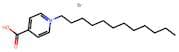
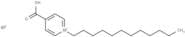
:Pyridinium, 4-carboxy-1-dodecyl-, bromide
Description:
Pyridinium, 4-carboxy-1-dodecyl-, bromide is a quaternary ammonium compound characterized by its long hydrophobic dodecyl chain and a hydrophilic pyridinium ring with a carboxylic acid functional group. This amphiphilic nature allows it to function effectively as a surfactant, facilitating the reduction of surface tension in various applications. The presence of the bromide ion contributes to its solubility in polar solvents, while the dodecyl chain enhances its compatibility with non-polar environments. This compound is often utilized in biochemical and industrial applications, including as a phase transfer catalyst and in the formulation of detergents and emulsifiers. Its ability to interact with biological membranes makes it of interest in pharmaceutical and biotechnological research. Additionally, the carboxylic acid group can participate in various chemical reactions, making it versatile in synthetic chemistry. Safety data should be consulted, as quaternary ammonium compounds can exhibit toxicity and environmental persistence.
Formula:C18H30NO2Br
Sort by
Purity (%)
0
100
|
0
|
50
|
90
|
95
|
100
Found 3 products.
Antimicrobial Compound 1
CAS:Antimicrobial Compound 1: Alkyl pyridinium, 12C tail, 4-carboxyl head, effective against B. subtilis & E. coli.Formula:C18H30BrNO2Purity:>99.99%Color and Shape:SolidMolecular weight:372.34Ref: TM-T10337
1mg129.00€5mg301.00€10mg411.00€25mg623.00€50mg837.00€100mg1,099.00€200mg1,485.00€1mL*10mM (DMSO)360.00€Antimicrobial compound 1
CAS:Antimicrobial Compound 1 is a broad-spectrum antimicrobial agent, which is derived from natural sources, specifically from marine bacteria with known potent antimicrobial properties. This compound acts by targeting and disrupting the synthesis of bacterial cell walls, specifically inhibiting peptidoglycan cross-linking, which ultimately leads to cell lysis and death due to osmotic instability. Such a mechanism offers a robust approach to tackling Gram-positive and Gram-negative bacteria.
Formula:C18H30BrNO2Purity:Min. 95%Molecular weight:372.3 g/molRef: 3D-QAA23783
Discontinued product