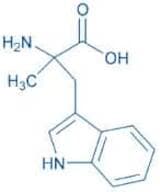
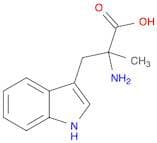
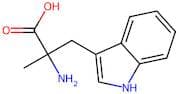
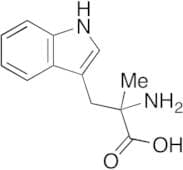
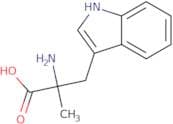
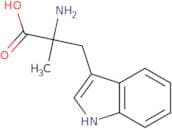
CAS 153-91-3
:A-methyl-dl-tryptophan
Description:
A-methyl-dl-tryptophan, with the CAS number 153-91-3, is an amino acid derivative that is structurally related to the essential amino acid tryptophan. It features a methyl group attached to the alpha carbon, which alters its biochemical properties compared to its parent compound. This compound is often used in biochemical research, particularly in studies involving protein synthesis and metabolism, as it can act as an analog of tryptophan. A-methyl-dl-tryptophan is known to inhibit the activity of certain enzymes involved in tryptophan metabolism, making it a valuable tool in studying metabolic pathways. It is typically a white to off-white crystalline solid and is soluble in polar solvents. The compound's unique structure allows it to interact with various biological systems, influencing processes such as neurotransmitter synthesis and protein folding. As with many amino acid derivatives, it is important to handle A-methyl-dl-tryptophan with care in laboratory settings, adhering to safety protocols to mitigate any potential hazards.
Formula:C12H14N2O2
Synonyms:- Alpha-Methyl-DL-Tryptophan
- H-.alpha.-Me-DL-Trp-OH
- A-Methyl-L-Tryptophan
Sort by
Purity (%)
0
100
|
0
|
50
|
90
|
95
|
100
Found 7 products.
H-α-Me-DL-Trp-OH
CAS:Bachem ID: 4008387.
Formula:C12H14N2O2Purity:> 99%Color and Shape:White PowderMolecular weight:218.26α-methyl-DL-tryptophan
CAS:Formula:C12H14N2O2Purity:95%Color and Shape:SolidMolecular weight:218.2518α-Methyl-DL-tryptophan
CAS:Applications α-methyl-DL-tryptophan is used as a blocker of ATBo, an amino acid transporter whose expression is upregulated in cancer. It is also a substrate or non-transported inhibitor of the amino acid transporter PAT2 (slc36a2).
References Karunakaran, J., et al.: J. Biochem., 414, 343 (2008); Edwards, N., et al.: Biochimica et Biophysica Acta, Biomembranes, 1808, 260 (2011)Formula:C12H14N2O2Color and Shape:Off White SolidMolecular weight:218.25DL-α-Methyltryptophan
CAS:DL-alpha-Methyltryptophan is a metabolite of the amino acid tryptophan. It is a monoamine neurotransmitter that has been implicated in brain function and inflammatory lesions. DL-alpha-Methyltryptophan can be used as a potential drug target for the treatment of Parkinson's disease, depression, and anxiety disorders. The hydroxyl group on the indole ring of DL-alpha-Methyltryptophan gives it an increased reactivity with oxygen, which allows it to be oxidized by monoamine oxidase B (MAO B) to 3-hydroxyanthranilic acid. This reaction can be inhibited by MAO A inhibitors such as clorgyline or selegiline. The oxidation of DL-alpha-Methyltryptophan leads to increased concentrations of serotonin in the brain and increased activity of aminotransferases.Formula:C12H14N2O2Purity:Min. 98 Area-%Color and Shape:PowderMolecular weight:218.25 g/mol2-Amino-3-(1H-indol-3-yl)-2-methylpropanoic acid
CAS:Formula:C12H14N2O2Purity:98%Color and Shape:SolidMolecular weight:218.256α-Methyl-DL-tryptophan
CAS:Alpha-methyl-DL-tryptophan is a useful building block that is used as a reaction component in the synthesis of other compounds. It is a versatile building block that can be used to synthesize complex compounds and as a necessary intermediate in the synthesis of other compounds. Alpha-methyl-DL-tryptophan is an important reagent for research purposes, and is also a speciality chemical. This compound has been shown to have beneficial effects on the central nervous system and may have potential therapeutic uses for neurological disorders (e.g., Parkinson's disease). Alpha-methyl-DL-tryptophan has been shown to be safe with minimal side effects when given at appropriate doses, but it should not be used by pregnant women or patients with epilepsy or depression.Formula:C12H14N2O2Purity:Min. 97.0 Area-%Molecular weight:218.26 g/mol