CAS 153034-86-7
:2-Chloro-4-iodopyridine
Description:
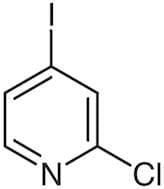
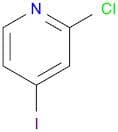
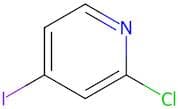
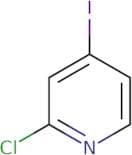
2-Chloro-4-iodopyridine is a heterocyclic organic compound characterized by a pyridine ring substituted with chlorine and iodine atoms. It features a chlorine atom at the 2-position and an iodine atom at the 4-position of the pyridine ring, which contributes to its reactivity and potential applications in various chemical reactions. This compound is typically a solid at room temperature and is soluble in organic solvents, making it useful in organic synthesis. Its molecular structure allows for participation in nucleophilic substitution reactions, and it can serve as a building block in the synthesis of pharmaceuticals and agrochemicals. The presence of halogen substituents enhances its electrophilic character, making it a valuable intermediate in the development of more complex molecules. Additionally, 2-Chloro-4-iodopyridine may exhibit biological activity, which can be explored in medicinal chemistry. As with many halogenated compounds, proper handling and safety precautions are essential due to potential toxicity and environmental impact.
Formula:C5H3ClIN
InChI:InChI=1/C5H3ClIN/c6-5-3-4(7)1-2-8-5/h1-3H
SMILES:c1cnc(cc1I)Cl
Sort by
Purity (%)
0
100
|
0
|
50
|
90
|
95
|
100
Found 5 products.
2-Chloro-4-iodopyridine
CAS:Formula:C5H3ClINPurity:>98.0%(GC)Color and Shape:White to Yellow powder to crystalMolecular weight:239.442-Chloro-4-iodopyridine
CAS:2-Chloro-4-iodopyridineFormula:C5H3ClINPurity:≥95%Color and Shape: white to off white crystalline powderMolecular weight:239.44g/mol2-Chloro-4-iodopyridine
CAS:2-Chloro-4-iodopyridine is an antibacterial agent that inhibits bacterial growth by interfering with the synthesis of folic acid. It has been shown to be effective against Escherichia coli, Staphylococcus aureus, and Pseudomonas aeruginosa. 2-Chloro-4-iodopyridine is a ligand that binds to metal ions such as copper and silver. The transfer of electrons from the metal ion to the ligand facilitates the cross-coupling reaction in organic synthesis. Cross-coupling reactions are also used in devices such as solar cells and hydrogen fuel cells. 2-Chloro-4-iodopyridine can also be used for photophysical experiments with single crystal x-ray diffraction studies.Formula:C5H3ClINPurity:Min. 95%Color and Shape:White PowderMolecular weight:239.44 g/mol