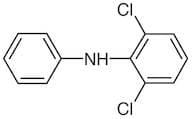
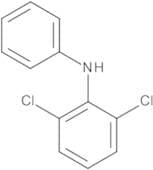
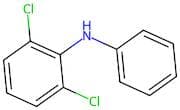
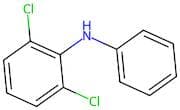
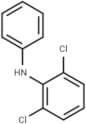
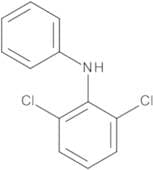
CAS 15307-93-4
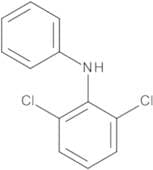
:2,6-Dichloro-N-phenylbenzenamine
- 2,6-Dichloro Diphenylamine
- 2,6-Dichloro-N-phenylbenzenamine
- 2,6-dichloro-N-phenylaniline
- Benzenamine, 2,6-dichloro-N-phenyl-
- Decarboxymethyl diclofenac
- Diphenylamine, 2,6-dichloro-
- N-(2,6-Dichlorophenyl)-N-phenylamine
- N-(2,6-Dichlorophenyl)aniline
- N-Phenyl-2,6-dichloroaniline
- 2,6-Dichlorodiphenylamine
2,6-Dichlorodiphenylamine
CAS:Formula:C12H9Cl2NPurity:>98.0%(GC)Color and Shape:White to Amber to Dark green powder to crystalMolecular weight:238.11Diclofenac Impurity 1 (2,6-Dichlorodiphenylamine)
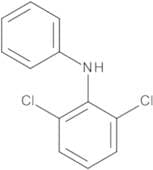
CAS:Formula:C12H9Cl2NColor and Shape:Pale Yellow SolidMolecular weight:238.112,6-Dichlorodiphenylamine
CAS:Controlled ProductFormula:C12H9Cl2NColor and Shape:NeatMolecular weight:238.11N-(2,6-Dichlorophenyl)aniline
CAS:Controlled ProductApplications N-(2,6-Dichlorophenyl)aniline is an analog of Diclofenac (D436450), a nonsteroidal anti-inflammatory compound an decycloxygenase (COX) inhibitor.
References Moser, P. et al.: J. Med. Chem., 33, 2358 (1990); Encinas, S. et al.: Photochem. Photobiol., 68,640 (1998); Kenny, J. R., et al.: J. Med. Chem., 47, 2816 (2004), Sasaki, A., et al.: J. Pharmacol. Sci., 108, 266 (2008), Dalvie, D., et al.: Chem. Res. Toxicol., 22, 357 (2009),Formula:C12H9Cl2NColor and Shape:WhiteMolecular weight:238.112,6-Dichloro-N-phenylaniline
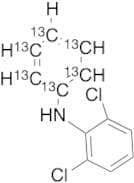
CAS:Formula:C12H9Cl2NPurity:98%Color and Shape:Solid, White to greyish yellow green powderMolecular weight:238.11N-(2,6-Dichlorophenyl)aniline-13C6
CAS:Controlled ProductApplications N-(2,6-Dichlorophenyl)aniline-13C6 is an intermediate in the synthesis of Diclofenac-13C6 (D436449). Diclofenac-13C6 is a labelled analogue of Diclofenac Acid (D436465), which is a nonsteroidal anti-inflammatory compound and decycloxygenase (COX) inhibitor. Diclofenac-13C6 is also an intermediate in synthesizing Diclofenac-13C6 Sodium Salt (D436453), which is a labelled analogue of Diclofenac Sodium Salt (D436450).
References Yagi, K., et. al.: Biol. Pharm. Bull., 37, 1234 (2014); Kenny, J. R., et al.: J. Med. Chem., 47, 2816 (2004); Sasaki, A., et al.: J. Pharmacol. Sci., 108, 266 (2008); Dalvie, D., et al.: Chem. Res. Toxicol., 22, 357 (2009); Kenny, J. R., et al.: J. Med. Chem., 47, 2816 (2004), Sasaki, A., et al.: J. Pharmacol. Sci., 108, 266 (2008); Dalvie, D., et al.: Chem. Res. Toxicol., 22, 357 (2009)Formula:C6C6H9Cl2NColor and Shape:NeatMolecular weight:244.069(2,6-Dichlorophenyl)phenylamine
CAS:2,6-Dichlorophenylphenylamine is a triazine compound that has been shown to inhibit the efflux pump in bladder cells. This inhibition leads to an increase in intracellular chloride concentrations and an increase in the amount of 2,6-dichlorophenylphenylamine that is retained by the cell. The 2,6-dichlorophenylphenylamine inhibits the production of prostaglandins and other inflammatory mediators by inhibiting cyclooxygenase enzymes in the arachidonic acid pathway. 2,6-Dichlorophenylphenylamine also inhibits prostaglandin synthesis by competing with AA for acylation reactions catalyzed by acyltransferase enzymes. This leads to a decrease in the production of substances such as leukotrienes and thromboxanes. 2,6-Dichlorophenylphenylamine may be used to treat eye disorders associated withFormula:C12H9Cl2NPurity:Min. 95%Molecular weight:238.11 g/mol2,6-Dichlorodiphenylamine
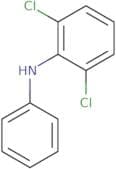
CAS:2,6-Dichlorodiphenylamine shows activity against Candida albicans infections. 2,6-Dichlorodiphenylamine elevated the MIC by 4-fold of diclofenac sodium (DFNa).Formula:C12H9Cl2NPurity:99.81%Color and Shape:Off White To Cream Coloured Crystalline SolidMolecular weight:238.11