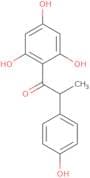
CAS 153409-52-0
:1-Propanone, 2-(4-hydroxyphenyl)-1-(2,4,6-trihydroxyphenyl)-
Description:
1-Propanone, 2-(4-hydroxyphenyl)-1-(2,4,6-trihydroxyphenyl)-, also known by its CAS number 153409-52-0, is an organic compound characterized by its ketone functional group and the presence of multiple hydroxyl groups, which contribute to its potential as a phenolic compound. This substance features a propanone backbone with two distinct aromatic rings, one of which is substituted with a hydroxyl group at the para position, while the other ring contains three hydroxyl groups at the 2, 4, and 6 positions. These hydroxyl groups enhance the compound's solubility in polar solvents and may impart antioxidant properties. The presence of multiple hydroxyl groups can also influence the compound's reactivity, making it a candidate for various chemical reactions, including those involving hydrogen bonding and complexation. Additionally, the structural features suggest potential applications in pharmaceuticals, materials science, and as a reagent in organic synthesis. However, specific physical properties such as melting point, boiling point, and solubility would need to be referenced from experimental data or literature for precise applications.
Formula:C15H14O5
Sort by
Purity (%)
0
100
|
0
|
50
|
90
|
95
|
100
Found 2 products.
6'-Hydroxy-O-desmethylangolensin
CAS:Controlled ProductFormula:C15H14O5Color and Shape:NeatMolecular weight:274.2696-Hydroxydesmethylangolensin
CAS:6-Hydroxydesmethylangolensin is a metabolite, which is derived from the fermentation of dietary isoflavones by intestinal microbiota. This compound originates specifically from the bacterial metabolism of daidzein, a principal soybean isoflavone. The mode of action of 6-Hydroxydesmethylangolensin involves its interaction with various biological pathways, potentially influencing estrogenic activity due to its structural similarity to estrogen, as well as possible antioxidant effects.
Formula:C15H14O5Purity:Min. 95%Color and Shape:PowderMolecular weight:274.27 g/mol