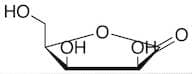
CAS 15384-34-6
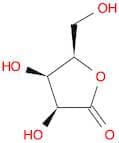
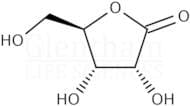
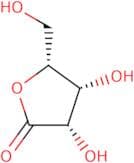
:(3R,5R)-3,4-dihydroxy-5-(hydroxymethyl)tetrahydrofuran-2-one
Description:
The chemical substance known as (3R,5R)-3,4-dihydroxy-5-(hydroxymethyl)tetrahydrofuran-2-one, with the CAS number 15384-34-6, is a cyclic sugar derivative characterized by its tetrahydrofuran ring structure. This compound features multiple hydroxyl groups, which contribute to its hydrophilic nature and potential for hydrogen bonding, influencing its solubility in water and other polar solvents. The presence of stereocenters at the 3 and 5 positions imparts chirality, leading to specific optical activity. This compound is often studied for its biological activity, particularly in relation to its role in metabolic pathways or as a potential precursor in synthetic organic chemistry. Its structural features suggest it may participate in various chemical reactions, including oxidation and esterification, making it of interest in both pharmaceutical and biochemical research. Overall, its unique structural characteristics and functional groups position it as a valuable compound in the study of carbohydrate chemistry and related fields.
Formula:C5H8O5
InChI:InChI=1/C5H8O5/c6-1-2-3(7)4(8)5(9)10-2/h2-4,6-8H,1H2/t2-,3?,4-/m1/s1
SMILES:C([C@@H]1C([C@H](C(=O)O1)O)O)O
Sort by
Purity (%)
0
100
|
0
|
50
|
90
|
95
|
100
Found 7 products.
D-Lyxono-1,4-lactone
CAS:D-Lyxono-1,4-lactone is a 4-deoxy-l-fucose derivative that is a potent inhibitor of bacterial growth. It is a highly effective antibiotic with a broad spectrum of activity against Gram-positive and Gram-negative bacteria. D-Lyxono-1,4-lactone has been shown to be active against multivorans, including Escherichia coli and Salmonella enterica serovar Typhimurium. This compound was found to be more active than antibiotics such as penicillin and streptomycin. The structure of D-Lyxono-1,4-lactone includes two hydroxamic acid groups that are connected by an acetal linkage to form the benzylidene acetal moiety. The optical enantiomers of this molecule have been characterized using high resolution NMR spectroscopy and magnetic resonance spectroscopy techniques.BR> Dosis: 250Formula:C5H8O5Purity:Min. 95.0 Area-%Molecular weight:148.11 g/molRef: 3D-W-201380
-Unit-ggTo inquire5gTo inquire10gTo inquire25gTo inquire50gTo inquire2500mgTo inquireD-Lyxono-1,4-lactone
CAS:D-Lyxono-1,4-lactone is an inhibitor of the enzyme fucosidase. It competitively inhibits the enzyme, but does not inhibit other hydroxamic acids such as enantiomers of D-lyxono-1,4-lactone. D-Lyxono-1,4-lactone has been used to treat HIV and AIDS because it prevents viral replication by blocking the synthesis of glycoproteins in the virus's envelope. It also has inhibitory effects on tumor cells that are not dependent on fucosidase activity. Magnetic resonance spectroscopy (NMR) studies have shown that d-lyxono-1,4-lactone binds to human liver cells and blocks the binding site for cytotoxic molecules in these cells. The molecular modelling study has demonstrated that d-lyxono 1,4 lactone binds to a specific site on human HLA class II molecule and reduces itsFormula:C5H8O5Purity:(%) Min. 97%Color and Shape:PowderMolecular weight:148.11 g/mol(3S,4R,5R)-3,4-Dihydroxy-5-(hydroxymethyl)dihydrofuran-2(3H)-one
CAS:Formula:C5H8O5Purity:95%Molecular weight:148.114D-Lyxono-1,4-lactone
CAS:Controlled ProductApplications D-Lyxono-1,4-lactone is used for synthesis of 1,4-dideoxy-1,4-imino-L-arabinitol, a glucosidase inhibitor with in vitro antiviral activity.
References Mitrakou, A., et al.: Diab. Med., 15, 657 (1998), Scott, L., et al.: Drugs, 59, 521 (2000), Vasella, A., et al.: Curr. Opin. Chem. Biol., 6, 619 (2002), Kato, A., et al.: J. Med. Chem., 48, 2036 (2005),Formula:C5H8O5Color and Shape:NeatMolecular weight:148.11