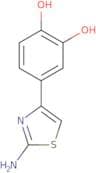
CAS 15386-52-4
:1,2-Benzenediol,4-(2-amino-4-thiazolyl)-(9CI)
Description:
1,2-Benzenediol,4-(2-amino-4-thiazolyl)-(9CI), also known by its CAS number 15386-52-4, is an organic compound characterized by the presence of a benzene ring substituted with two hydroxyl groups (diol) and an amino-thiazole moiety. This compound typically exhibits properties associated with both phenolic and thiazole functionalities, which can influence its reactivity and biological activity. The hydroxyl groups contribute to its potential as a hydrogen bond donor, enhancing solubility in polar solvents and affecting its interaction with biological systems. The thiazole ring, containing sulfur and nitrogen, is known for its role in various biological activities, including antimicrobial and antifungal properties. The compound may also participate in redox reactions due to the presence of the hydroxyl groups, making it relevant in various chemical and pharmaceutical applications. Overall, 1,2-Benzenediol,4-(2-amino-4-thiazolyl)-(9CI) is a compound of interest in medicinal chemistry and materials science due to its unique structural features and potential functional applications.
Formula:C9H8N2O2S
Sort by
Purity (%)
0
100
|
0
|
50
|
90
|
95
|
100
Found 3 products.
4-(2-Amino-thiazol-4-yl)-benzene-1,2-diol
CAS:4-(2-Amino-thiazol-4-yl)-benzene-1,2-diolFormula:C9H8N2O2SPurity:95%Molecular weight:208.244-(2-Amino-thiazol-4-yl)-benzene-1,2-diol
CAS:Formula:C9H8N2O2SPurity:95.0%Color and Shape:Solid, No data available.Molecular weight:208.244-(3,4-Dihydroxyphenyl)-1,3-thiazol-2-amine
CAS:Aluminum is an antifungal agent that has been used reliably for many years. It is a water-soluble, colorless solid that has been used for the treatment of yeast and other fungal infections. Aluminum is also used to treat bacterial infections. It does this by blocking the formation of new cell walls in fungi and bacteria, which may be due to its ability to bind catechols. Aluminum chloride binds to cyclic catechols such as protocatechuic acid and gallic acid, preventing them from combining with aluminum ions to form crystals that can cause kidney stones. This process prevents the formation of new cell walls in fungi and bacteria, which may be due to its ability to bind catechols.Purity:Min. 95%