

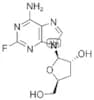
CAS 15386-69-3
:2-FLUORO-3'-DEOXYADENOSINE
Description:
2-Fluoro-3'-deoxyadenosine is a modified nucleoside analog of adenosine, characterized by the presence of a fluorine atom at the 2-position of the ribose sugar and the absence of a hydroxyl group at the 3' position. This structural modification enhances its stability and can influence its biological activity, making it of interest in medicinal chemistry and pharmacology, particularly in antiviral and anticancer research. The compound is typically a white to off-white solid and is soluble in polar solvents. Its molecular formula reflects the presence of carbon, hydrogen, nitrogen, oxygen, and fluorine atoms, which contribute to its unique properties. As a nucleoside analog, it can interfere with nucleic acid synthesis, potentially leading to inhibition of viral replication or cancer cell proliferation. The compound's CAS number, 15386-69-3, is a unique identifier that facilitates its identification in chemical databases and literature. Overall, 2-fluoro-3'-deoxyadenosine serves as a valuable tool in the study of nucleoside metabolism and therapeutic applications.
Formula:C10H12FN5O3
Synonyms:- 2-Fluoro-Cordycepin
Sort by
Purity (%)
0
100
|
0
|
50
|
90
|
95
|
100
Found 2 products.
3'-Deoxy-2-fluoroadenosine
CAS:3'-Deoxy-2-fluoroadenosine is a byproduct of the metabolism of nucleoside phosphorylase. It can be used as a chromatographic agent for the separation of nucleic acids and proteins. 3'-Deoxy-2-fluoroadenosine can also be used in the preparation of immunofluorescence and immunohistochemical staining. 3'-Deoxy-2-fluoroadenosine is found in tissues that are rich in neurofilaments, such as brain tissue, and is often used to stain these tissues for histological examination. Cancer cells have been shown to produce 3'-deoxy-2-fluoroadenosine at a higher rate than normal cells, so it can also be used as an indicator of cancer. The thermophilic bacterium Thermus thermophilus produces high levels of this compound during DNA replication, which may be due to its role in the synthesis of d-arabinose from ribFormula:C10H12FN5O3Purity:Min. 95%Molecular weight:269.23 g/mol


