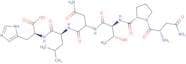
CAS 154277-65-3
:Trypsin-modulatingoostatic factor (Neobellieria bullata) (9CI)
Description:
Trypsin-modulating oostatic factor (Neobellieria bullata) (9CI), with the CAS number 154277-65-3, is a peptide derived from the larvae of the flesh fly, Neobellieria bullata. This substance is known for its role in regulating trypsin activity, which is crucial for digestive processes in various organisms. It functions as a modulator of oogenesis, influencing the reproductive cycle by affecting the synthesis and release of trypsin, an enzyme that breaks down proteins. The compound exhibits specific biological activity, making it of interest in biochemical research, particularly in studies related to insect physiology and potential applications in pest control. Its structure typically includes a sequence of amino acids that confer its biological properties. As a peptide, it is generally soluble in water and may exhibit stability under physiological conditions, although its activity can be influenced by factors such as pH and temperature. Further research into its mechanisms of action and potential applications could provide insights into its utility in both biological and agricultural contexts.
Formula:C29H46N10O10
Synonyms:- 11: PN:US6566129 SEQID: 18 unclaimed protein
- 15: PN: US6635265 SEQID: 15 claimedsequence
- L-Histidine,L-asparaginyl-L-prolyl-L-threonyl-L-asparaginyl-L-leucyl-
- Neb-TMOF
- Neobellieria bullata trypsin modulating oostatic factor
- Peptide TMOF(Neobellieria bullata)
- Trypsin-modulating oostatic factor (gray flesh fly)
Sort by
Purity (%)
0
100
|
0
|
50
|
90
|
95
|
100
Found 1 products.
Trypsin-Modulating Oostatic Factor (Neobelliera bullata)
CAS:Proctolin is a peptide hormone that regulates the growth of the ovary. Proctolin has been found to be a proteolytic molecule that specifically cleaves at the carboxy-terminal end of the protein substrate. It also has inhibitory effects on the activity of carboxypeptidase, an enzyme involved in the digestion and absorption of proteins. Proctolin has been shown to modulate biological studies, such as nitrogen atoms and sequences, which may be due to its ability to regulate and stimulate biosynthesis.
Formula:C29H46N10O10Purity:Min. 95%Molecular weight:694.74 g/molRef: 3D-FT108569
Discontinued product