CAS 15457-50-8
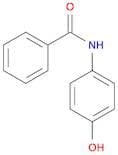
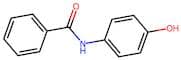
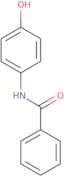
:p-(N-Benzoylamino)phenol
Description:
p-(N-Benzoylamino)phenol, also known as 4-(N-benzoylamino)phenol, is an organic compound characterized by its phenolic structure, which includes a hydroxyl group (-OH) attached to a benzene ring. The presence of the benzoylamino group indicates that it has an amide functional group derived from benzoic acid, contributing to its chemical reactivity and potential applications. This compound typically appears as a solid and is soluble in organic solvents, reflecting its aromatic nature. It is often utilized in various chemical syntheses and may serve as an intermediate in the production of dyes, pharmaceuticals, or other organic compounds. The compound's properties, such as melting point, boiling point, and specific reactivity, can vary based on its purity and the conditions under which it is handled. Safety data should be consulted to understand its toxicity and handling precautions, as with any chemical substance. Overall, p-(N-benzoylamino)phenol is notable for its functional groups that enable diverse chemical interactions.
Formula:C13H11NO2
InChI:InChI=1/C13H11NO2/c15-12-8-6-11(7-9-12)14-13(16)10-4-2-1-3-5-10/h1-9,15H,(H,14,16)
SMILES:c1ccc(cc1)C(=O)Nc1ccc(cc1)O
Synonyms:- 4-(Benzoylamino)phenol
- 4-(N-Benzoylamino)phenol
- 4’-Hydroxybenzanilide
- 4-Benzamidophenol
- Benzamide,N-(4-hydroxyphenyl)-
- Benzanilide,4’-hydroxy-
- N-Benzoyl-4-aminophenol
- N-(4-hydroxyphenyl)benzamide
Sort by
Purity (%)
0
100
|
0
|
50
|
90
|
95
|
100
Found 4 products.
p-(N-Benzoylamino)phenol
CAS:Formula:C13H11NO2Purity:97%Color and Shape:SolidMolecular weight:213.2319N-(4-Hydroxyphenyl)benzamide
CAS:4-Hydroxyphenylbenzamide is a metabolite of biphenyl and an estrogen receptor modulator. It has been shown to inhibit the proliferation of human breast cancer cells in vitro. 4-Hydroxyphenylbenzamide binds to the estrogen receptors and inhibits the negative feedback on the hypothalamus, which leads to increased levels of luteinizing hormone and follicle stimulating hormone. This results in vasomotor symptoms such as hot flashes, night sweats, and mood swings. The drug also has effects on bone metabolism by increasing bone resorption and decreasing bone formation. 4-Hydroxyphenylbenzamide is metabolized in the liver by glucuronidation conjugates, which are excreted in feces or eliminated through urine.
Formula:C13H11NO2Purity:Min. 95%Molecular weight:213.23 g/mol