CAS 1556-34-9
:Bromoethylacridine
Description:
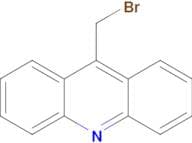
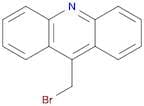
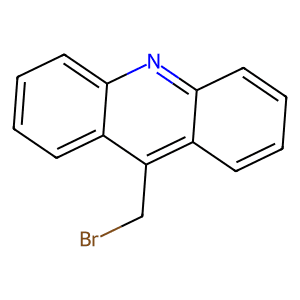
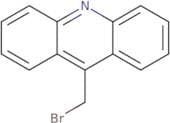
Bromoethylacridine, with the CAS number 1556-34-9, is a chemical compound characterized by its acridine backbone substituted with a bromoethyl group. This compound typically exhibits properties associated with both aromatic and aliphatic systems, which can influence its reactivity and interactions. Bromoethylacridine is often studied for its potential applications in medicinal chemistry, particularly in the development of antitumor agents, due to the acridine moiety's known biological activity. The presence of the bromoethyl group can enhance its lipophilicity, potentially affecting its pharmacokinetics and bioavailability. Additionally, the compound may participate in various chemical reactions, including nucleophilic substitutions and electrophilic aromatic substitutions, making it a versatile intermediate in organic synthesis. Its physical properties, such as solubility and melting point, can vary based on the specific conditions and purity of the sample. Overall, Bromoethylacridine represents a significant compound in the realm of organic and medicinal chemistry, warranting further investigation for its therapeutic potential.
Formula:C14H10BrN
InChI:InChI=1/C14H10BrN/c15-9-12-10-5-1-3-7-13(10)16-14-8-4-2-6-11(12)14/h1-8H,9H2
SMILES:c1ccc2c(c1)c(CBr)c1ccccc1n2
Synonyms:- 9-(Bromomethyl)acridine
Sort by
Purity (%)
0
100
|
0
|
50
|
90
|
95
|
100
Found 5 products.
9-(Bromomethyl)acridine [for HPLC Labeling]
CAS:Formula:C14H10BrNPurity:>98.0%(T)(HPLC)Color and Shape:Light yellow to Brown powder to crystalMolecular weight:272.159-(Bromomethyl)acridine
CAS:Purity:95.0%Color and Shape:Liquid, No data available.Molecular weight:272.1449890136719Acridine, 9-(bromomethyl)-
CAS:Formula:C14H10BrNPurity:98%Color and Shape:SolidMolecular weight:272.13999-(Bromomethyl)acridine
CAS:9-(Bromomethyl)acridine (9-BMA) is a fluorescent molecule that has been used as a probe for the identification of fatty acids, with an acyl chain length between 10 and 20 carbon atoms. It is also an important reagent in biological studies, such as the investigation of the mechanism of action of antidepressant drugs. 9-BMA was first synthesized in 1884 by German chemist Richard Willstätter. The compound is used as a starting material to synthesize other chemicals, such as trifluoromethanesulfonate (TMS). In analytical chemistry, TMS can be used to modify glycerides into fatty acid methyl esters (FAMEs), which are then analysed using gas chromatography (GC). GC analysis allows for the detection of individual fatty acids in a sample, which may then be used to determine dietary habits. The FAMEs can also be analysed using linear regression analysis to determine their molecular weightFormula:C14H10BrNPurity:Min. 95%Color and Shape:PowderMolecular weight:272.14 g/mol
![9-(Bromomethyl)acridine [for HPLC Labeling]](/_next/image/?url=https%3A%2Fstatic.cymitquimica.com%2Fproducts%2F3B%2Fthumb%2FB1926.jpg&w=3840&q=75)