


CAS 155760-02-4
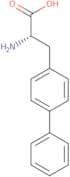
:H-4-Phenyl-Phe-OH
Description:
H-4-Phenyl-Phe-OH, also known as a phenylalanine derivative, is a chemical compound characterized by its structure, which includes a phenyl group attached to the amino acid phenylalanine. This compound is typically used in biochemical research and may serve as a building block in peptide synthesis or as a model for studying protein interactions. Its properties include being soluble in polar solvents, which facilitates its use in various biological assays. The presence of the hydroxyl group (-OH) suggests potential for hydrogen bonding, influencing its reactivity and interactions with other molecules. Additionally, the phenyl group contributes to its hydrophobic characteristics, which can affect its behavior in biological systems. As a derivative of phenylalanine, it may also play a role in metabolic pathways and could be of interest in studies related to neurotransmitter synthesis or dietary impacts on health. Overall, H-4-Phenyl-Phe-OH is significant in both synthetic and biological chemistry contexts.
Formula:C18H20N2O4
InChI:InChI=1/C18H20N2O4/c19-15(17(21)22)9-11-1-5-13(6-2-11)14-7-3-12(4-8-14)10-16(20)18(23)24/h1-8,15-16H,9-10,19-20H2,(H,21,22)(H,23,24)/t15-,16-/m0/s1
SMILES:c1cc(ccc1C[C@@H](C(=O)O)N)c1ccc(cc1)C[C@@H](C(=O)O)N
Synonyms:- H-Bip-OH
- L--4,4-Biphenylalanine
- (2S)-2-amino-3-biphenyl-4-ylpropanoic acid (non-preferred name)
- (2R)-2-ammonio-3-biphenyl-4-ylpropanoate
- (2S,2'S)-3,3'-biphenyl-4,4'-diylbis(2-aminopropanoic acid) (non-preferred name)
- L-4,4'-Biphenylphenylalanine
- (S)-2-Amino-3-(biphenyl-4-yl)propanoic acid
Sort by
Purity (%)
0
100
|
0
|
50
|
90
|
95
|
100
Found 4 products.
[1,1'-Biphenyl]-4-propanoic acid, α-amino-, (αS)-
CAS:Formula:C15H15NO2Purity:98%Color and Shape:SolidMolecular weight:241.2851H-p-Phenyl-L-phenylalanine
CAS:H-p-Phenyl-L-phenylalanine (HPPPA) is a proteolytic agent that has been shown to have antimicrobial activity. It has the ability to inhibit bacterial growth by hydrolysing proteins and peptides, which are essential for bacterial cell division. HPPPA also exhibits hemolytic activity, which may be due to its cationic nature and inhibition of the synthesis of collagen in human erythrocytes. The pharmacokinetic properties of HPPPA have been studied in mice, where it was found that this drug is primarily excreted by the kidney. HPPPA has also been shown to be an inhibitor of glp-1r agonists, metal hydroxides, and tumor cells in animal models. It is believed that HPPPA's ability to bind receptors may contribute to its anti-tumor effects.Formula:C15H15NO2Purity:Min. 95%Color and Shape:White/Off-White SolidMolecular weight:241.29 g/mol(S)-3-([1,1′-Biphenyl]-4-yl)-2-aminopropanoic acid
CAS:Formula:C15H15NO2Purity:98%Color and Shape:SolidMolecular weight:241.29
![[1,1'-Biphenyl]-4-propanoic acid, α-amino-, (αS)-](/_next/image/?url=https%3A%2Fstatic.cymitquimica.com%2Fproducts%2FIN%2Fthumb%2FDA001O64.jpg&w=3840&q=75)



![(S)-3-([1,1′-Biphenyl]-4-yl)-2-aminopropanoic acid](/_next/image/?url=https%3A%2Fstatic.cymitquimica.com%2Fproducts%2F10%2Fthumb%2FF211753.jpg&w=3840&q=75)
