CAS 156-72-9
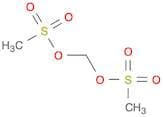
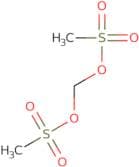
:Methylene dimethanesulfonate
Description:
Methylene dimethanesulfonate, with the CAS number 156-72-9, is an organic compound characterized by its sulfonate functional groups. It is a colorless to pale yellow liquid that is soluble in water and various organic solvents, making it versatile for different applications. This compound is primarily used as a reagent in organic synthesis, particularly in the preparation of sulfonate esters and as a sulfonating agent. Its structure features a methylene bridge connecting two dimethanesulfonate groups, which contributes to its reactivity. Methylene dimethanesulfonate is known for its ability to facilitate nucleophilic substitution reactions, making it valuable in the synthesis of pharmaceuticals and agrochemicals. However, it should be handled with care due to its potential toxicity and irritant properties. Proper safety measures, including the use of personal protective equipment, are essential when working with this chemical to mitigate any health risks associated with exposure.
Formula:C3H8O6S2
InChI:InChI=1/C3H8O6S2/c1-10(4,5)8-3-9-11(2,6)7/h3H2,1-2H3
InChI key:InChIKey=IQLZWWDXNXZGPK-UHFFFAOYSA-N
SMILES:O(S(C)(=O)=O)COS(C)(=O)=O
Synonyms:- (Methanesulfonyloxy)methyl methanesulfonate
- Ai3-51799
- Brn 1785371
- Ent-51799
- Mdms
- Methanediol, 1,1-dimethanesulfonate
- Methanediol, dimethanesulfonate
- Methanediyl Dimethanesulfonate
- Methanesulfonic acid, methylene ester
- Methylene bis(methanesulfonate)
- Methylene dimethane sulfonate
- Nsc 171337
- 4-04-00-00022 (Beilstein Handbook Reference)
- See more synonyms
Sort by
Purity (%)
0
100
|
0
|
50
|
90
|
95
|
100
Found 2 products.
(Methanesulfonyloxy)methyl methanesulfonate
CAS:Methanesulfonyloxy)methyl methanesulfonate is a drug that inhibits the polymerase chain reaction. It has been shown to inhibit HIV infection in human macrophages, and has been used for the treatment of adrenocortical carcinoma and diabetic patients with high blood sugar levels. Methanesulfonyloxy)methyl methanesulfonate is a competitive inhibitor of DNA binding activity in the presence of an excess of dNTPs, and it binds to the 3'-terminal region on the template strand. This inhibition leads to arrest of RNA synthesis at this point. This drug also binds to toll-like receptors, which are present on many types of cells, and may have biological properties that could be beneficial in infectious diseases as well as atherosclerotic cardiovascular disease or solid tumours.Formula:C3H8O6S2Purity:Min. 95%Molecular weight:204.2 g/mol