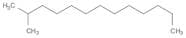
CAS 1560-96-9
:2-Methyltridecane
Description:
2-Methyltridecane is an organic compound classified as an alkane, specifically a branched-chain hydrocarbon. It consists of a straight-chain of thirteen carbon atoms with a methyl group attached to the second carbon. This structure contributes to its physical properties, such as a relatively high boiling point and melting point compared to straight-chain alkanes of similar molecular weight. 2-Methyltridecane is a colorless liquid at room temperature and is insoluble in water due to its hydrophobic nature, but it is soluble in organic solvents. It is primarily used in the petrochemical industry and as a component in various formulations, including fuels and lubricants. The compound is also of interest in research related to hydrocarbon mixtures and their behavior in different environments. Its chemical stability and low reactivity make it suitable for applications where resistance to degradation is essential. As with many hydrocarbons, it is important to handle 2-methyltridecane with care, as it may pose health and environmental risks if not managed properly.
Formula:C14H30
InChI:InChI=1S/C14H30/c1-4-5-6-7-8-9-10-11-12-13-14(2)3/h14H,4-13H2,1-3H3
InChI key:InChIKey=CJBFZKZYIPBBTO-UHFFFAOYSA-N
SMILES:C(CCCCCCCC)CCC(C)C
Synonyms:- 2-Methyl-n-tridecane
- 2-Methytridecane
- Tridecane,2-Methyl-
- 2-Methyltridecane
Sort by
Purity (%)
0
100
|
0
|
50
|
90
|
95
|
100
Found 2 products.
2-Methyltridecane-d6
CAS:<p>2-Methyltridecane-d6 is a medicinal chemical compound that serves as an inhibitor of kinases, which play a crucial role in the development and progression of cancer. It has been found to exhibit potent anticancer activity by inhibiting specific protein kinases involved in cancer cell growth and survival. This compound has been studied extensively for its ability to induce apoptosis, or programmed cell death, in cancer cells. 2-Methyltridecane-d6 is an analog of a natural product found in Chinese herbal medicine and has shown promising results in preclinical studies as a potential therapeutic agent for various types of cancers. Its presence can be detected in human urine, making it a useful biomarker for monitoring treatment efficacy.</p>Formula:C14H30Purity:Min. 95%Molecular weight:198.39 g/mol