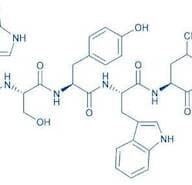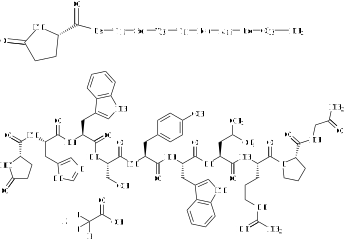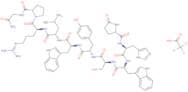
CAS 156126-74-8
:(TRP6)-LHRH
Description:
(TRP6)-LHRH, also known as Triptorelin, is a synthetic analog of gonadotropin-releasing hormone (GnRH). It is characterized by its ability to regulate the release of luteinizing hormone (LH) and follicle-stimulating hormone (FSH) from the anterior pituitary gland, thereby influencing reproductive hormone levels. This peptide consists of a sequence of amino acids that includes a tryptophan residue at the sixth position, which enhances its potency and stability compared to natural GnRH. Triptorelin is primarily used in clinical settings for the treatment of hormone-sensitive conditions, such as prostate cancer and endometriosis, by suppressing gonadal steroid production. Its mechanism of action involves downregulation of GnRH receptors after initial stimulation, leading to decreased secretion of sex hormones. The substance is typically administered via injection and has a relatively long half-life, allowing for sustained therapeutic effects. As a peptide, it is sensitive to enzymatic degradation, which is a consideration in its formulation and delivery.
Formula:C64H82N18O13
Synonyms:- (Trp6)-Gonadotropin-Releasing Hormone
- (Trp6)-Luteinizing Hormone-Releasing Factor
- (Trp6)-Luteinizing Hormone-Releasing Hormone
- (Trp6)-Triptorelin
- Pyr-His-Trp-Ser-Tyr-Trp-Leu-Arg-Pro-Gly-Nh2
Sort by
Purity (%)
0
100
|
0
|
50
|
90
|
95
|
100
Found 3 products.
(Trp⁶)-LHRH
CAS:Bachem ID: 4029115.
Formula:C64H82N18O13Purity:97.3%Color and Shape:White PowderMolecular weight:1311.47Triptorelin Impurity 3 Ditrifluoroacetate
CAS:Formula:C64H82N18O13·2C2HF3O2Molecular weight:1311.47 2*114.02(Trp6)-LHRH trifluoroacetate salt Pyr-His-Trp-Ser-Tyr-Trp-Leu-Arg-Pro-Gly-NH2 trifluoroacetate salt
CAS:Please enquire for more information about (Trp6)-LHRH trifluoroacetate salt Pyr-His-Trp-Ser-Tyr-Trp-Leu-Arg-Pro-Gly-NH2 trifluoroacetate salt including the price, delivery time and more detailed product information at the technical inquiry form on this pageFormula:C64H82N18O13Purity:Min. 95%Molecular weight:1,311.45 g/mol