CAS 1566-81-0
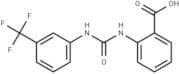
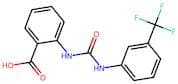
:2-[3-[3-(Trifluoromethyl)phenyl]ureido]benzoic acid
Description:
2-[3-[3-(Trifluoromethyl)phenyl]ureido]benzoic acid, with the CAS number 1566-81-0, is a chemical compound characterized by its complex structure that includes a benzoic acid moiety and a urea functional group. This compound features a trifluoromethyl group, which is known for its electron-withdrawing properties, enhancing the compound's lipophilicity and potentially influencing its biological activity. The presence of the urea linkage contributes to its ability to form hydrogen bonds, which can be significant in interactions with biological targets. Typically, compounds of this nature may exhibit pharmaceutical properties, making them of interest in medicinal chemistry. The trifluoromethyl group also imparts unique chemical reactivity and stability, often leading to enhanced metabolic stability in biological systems. Overall, this compound's characteristics suggest potential applications in drug development, particularly in areas requiring specific interactions with biological macromolecules. However, detailed studies would be necessary to fully elucidate its properties and potential uses.
Formula:C15H11F3N2O3
Synonyms:- Ns-1652
Sort by
Purity (%)
0
100
|
0
|
50
|
90
|
95
|
100
Found 5 products.
NS1652
CAS:<p>NS1652 is an anion conductance inhibitor. NS1652 blocks chloride channel has an IC50 of 1.6 μM in human and mouse red blood cells.</p>Formula:C15H11F3N2O3Purity:99.62%Color and Shape:SolidMolecular weight:324.25NS1652
CAS:<p>NS1652 is a new drug that has been shown to have high potential for interactions with other drugs. It is a cationic amino acid that binds to the red cell membrane and alters transport properties of the cell. NS1652 has been shown to inhibit uptake of the amino acid L-lysine by cells. It also inhibits transfection experiments in vitro, which may be due to its ability to interfere with cellular physiology. <br>NS1652 is a high-resistance, non-selective cation channel blocker that has been shown to have chemical structures similar to those found in common drugs such as ibuprofen, naproxen, indomethacin, and diclofenac. These similarities suggest that it could cause adverse effects when taken with these medications because there would be an increased risk of interaction between the two drugs.</p>Formula:C15H11F3N2O3Purity:Min. 95%Molecular weight:324.25 g/mol