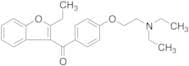
CAS 15686-63-2
:Etabenzarone
Description:
Etabenzarone, with the CAS number 15686-63-2, is a chemical compound that belongs to the class of benzophenones. It is primarily recognized for its application in dermatological formulations, particularly as a topical agent for the treatment of skin conditions. The compound exhibits properties that allow it to absorb ultraviolet (UV) light, making it useful in photoprotection and as a sunscreen agent. Etabenzarone is characterized by its ability to stabilize and enhance the efficacy of other active ingredients in formulations. Additionally, it has been studied for its potential antioxidant properties, which may contribute to skin health by mitigating oxidative stress. The compound is typically presented in a crystalline form and is soluble in organic solvents, which facilitates its incorporation into various formulations. Safety assessments indicate that it is generally well-tolerated when used as directed, although, like many chemical substances, it may cause irritation in sensitive individuals. Overall, Etabenzarone is valued in cosmetic and pharmaceutical applications for its protective and stabilizing qualities.
Formula:C23H27NO3
InChI:InChI=1/C23H27NO3/c1-4-20-22(19-9-7-8-10-21(19)27-20)23(25)17-11-13-18(14-12-17)26-16-15-24(5-2)6-3/h7-14H,4-6,15-16H2,1-3H3
SMILES:CCc1c(c2ccccc2o1)C(=O)c1ccc(cc1)OCCN(CC)CC
Synonyms:- (4-(2-(Diethylamino)ethoxy)phenyl)(2-ethyl-3-benzofuranyl)methanone
- {4-[2-(Diethylamino)ethoxy]phenyl}(2-ethyl-1-benzofuran-3-yl)methanone
- 15686-63-2
- Methanone, [4-[2-(Diethylamino)Ethoxy]Phenyl](2-Ethyl-3-Benzofuranyl)-
Sort by
Purity (%)
0
100
|
0
|
50
|
90
|
95
|
100
Found 2 products.
Etabenzarone
CAS:Etabenzarone is a research tool that was developed for the study of ion channels and protein interactions. It is a ligand that binds to the receptor Ligand and has been used to study cell biology, antibody production, and pharmacology. Etabenzarone is also an inhibitor that prevents the activation of ion channels by binding to them. It has been shown to bind to proteins in cell culture experiments as well as inhibit their function.Formula:C23H27NO3Purity:Min. 95%Molecular weight:365.50 g/mol