CAS 156951-82-5
:Chrysotoxine
Description:
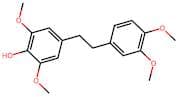
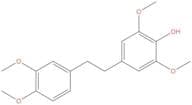
Chrysotoxine, identified by the CAS number 156951-82-5, is a chemical compound that belongs to the class of alkaloids. It is derived from certain plant sources and is known for its potential biological activity. Chrysotoxine exhibits a complex molecular structure, which contributes to its pharmacological properties. The compound has garnered interest in the field of medicinal chemistry due to its possible effects on the central nervous system and its interactions with various biological targets. Its characteristics include solubility in organic solvents, which is typical for many alkaloids, and it may exhibit varying degrees of stability under different environmental conditions. Research into chrysotoxine has focused on its potential therapeutic applications, as well as its mechanisms of action, although comprehensive studies are still ongoing to fully elucidate its properties and effects. As with many chemical substances, safety and toxicity profiles are crucial for understanding its use in any potential applications.
Formula:C18H22O5
InChI:InChI=1S/C18H22O5/c1-20-14-8-7-12(9-15(14)21-2)5-6-13-10-16(22-3)18(19)17(11-13)23-4/h7-11,19H,5-6H2,1-4H3
InChI key:InChIKey=YUHRVKGYFHPWRI-UHFFFAOYSA-N
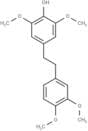
SMILES:C(CC1=CC(OC)=C(OC)C=C1)C2=CC(OC)=C(O)C(OC)=C2
Synonyms:- Chrysotoxin
- Phenol, 4-[2-(3,4-dimethoxyphenyl)ethyl]-2,6-dimethoxy-
- Chrysotoxine
- 4-[2-(3,4-Dimethoxyphenyl)ethyl]-2,6-dimethoxyphenol
Sort by
Purity (%)
0
100
|
0
|
50
|
90
|
95
|
100
Found 5 products.
Phenol, 4-[2-(3,4-dimethoxyphenyl)ethyl]-2,6-dimethoxy-
CAS:Formula:C18H22O5Purity:95%Color and Shape:SolidMolecular weight:318.3643Chrysotoxine
CAS:Chrysotoxine (Phenol, 4-[2-(3,4-dimethoxyphenyl)ethyl]-2,6-dimethoxy-) inhibits 6-hydroxydopamine induced apoptosis in SH-SY5Y cells via NF-κB modulation andFormula:C18H22O5Purity:99.34%Color and Shape:SolidMolecular weight:318.36Chrysotoxine
CAS:Chrysotoxine is a research tool that activates a receptor and/or ligand. Chrysotoxine is an activator of ion channels, which are proteins located in cell membranes that regulate the flow of ions across the membrane. It is also an inhibitor of protein interactions and has been used to study the interaction between peptides and antibodies. Chrysotoxine binds to an antibody or peptide and prevents it from binding with its ligand or receptor, respectively. The resulting complex can be studied using various techniques such as Western blotting.
Formula:C18H22O5Purity:Min. 95%Molecular weight:318.4 g/molRef: 3D-GGA95182
Discontinued product
![Phenol, 4-[2-(3,4-dimethoxyphenyl)ethyl]-2,6-dimethoxy-](/_next/image/?url=https%3A%2Fstatic.cymitquimica.com%2Fproducts%2FIN%2Fthumb%2FDA001P42.jpg&w=3840&q=75)