CAS 15733-84-3
:2-Quinolinecarboxylic acid, 6-methyl-
Description:
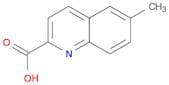
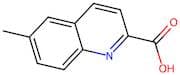
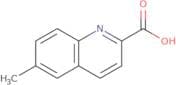
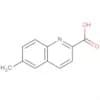
2-Quinolinecarboxylic acid, 6-methyl- is an organic compound characterized by its quinoline structure, which consists of a fused benzene and pyridine ring. This compound features a carboxylic acid functional group (-COOH) at the second position and a methyl group (-CH3) at the sixth position of the quinoline ring. It is typically a solid at room temperature and may exhibit moderate solubility in polar solvents due to the presence of the carboxylic acid group. The compound is of interest in various fields, including medicinal chemistry, due to its potential biological activities and applications in the synthesis of other chemical entities. Its molecular structure allows for various interactions, making it a candidate for studies in drug development and material science. Additionally, like many quinoline derivatives, it may exhibit fluorescence properties, which can be useful in analytical applications. Safety data should be consulted for handling, as with any chemical substance, to ensure proper precautions are taken.
Formula:C11H9NO2
Sort by
Purity (%)
0
100
|
0
|
50
|
90
|
95
|
100
Found 4 products.
2-Quinolinecarboxylic acid, 6-methyl-
CAS:Formula:C11H9NO2Purity:95%Color and Shape:SolidMolecular weight:187.19476-Methylquinoline-2-carboxylic acid
CAS:6-Methylquinoline-2-carboxylic acidPurity:98%Molecular weight:187.19g/mol6-Methylquinoline-2-Carboxylic Acid
CAS:6-Methylquinoline-2-carboxylic acid is a chromophore that is found in the molecule isoquinoline-3-carboxylic acid. It is an antibacterial agent that has been shown to inhibit bacterial biosynthesis and growth. 6-Methylquinoline-2-Carboxylic Acid may also have potential as a chemotherapeutic agent for cancer treatment due to its ability to bind to DNA and inhibit RNA synthesis. This drug is synthesized by the condensation of quinoline derivatives with carboxylic acids, followed by reduction of the resulting imine with sodium dithionite. The product can be purified using high performance liquid chromatography, incubated with magnetic particles, and desorbed from the beads using protonation.Formula:C11H9NO2Purity:Min. 95%Molecular weight:187.2 g/mol