CAS 157604-98-3
:Dehydrotomatine
Description:
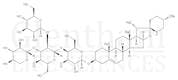
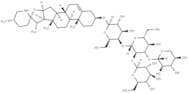
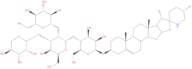
Dehydrotomatine is a chemical compound classified as an alkaloid, primarily derived from the plant species of the Solanaceae family, particularly from the genus Solanum. It is known for its structural similarity to other tropane alkaloids, which often exhibit biological activity. The compound is characterized by its complex molecular structure, featuring a bicyclic framework that includes a nitrogen atom, contributing to its pharmacological properties. Dehydrotomatine has garnered interest in medicinal chemistry due to its potential therapeutic effects, including analgesic and anti-inflammatory activities. Its mechanism of action may involve interactions with neurotransmitter systems, although specific pathways and effects require further investigation. The compound's solubility, stability, and reactivity can vary depending on environmental conditions, making it essential to consider these factors in experimental applications. As with many alkaloids, safety and toxicity profiles are critical for its use in research and potential therapeutic applications, necessitating thorough evaluation in preclinical studies.
Formula:C50H81NO21
InChI:InChI=1S/C50H81NO21/c1-20-7-12-50(51-15-20)21(2)32-28(72-50)14-26-24-6-5-22-13-23(8-10-48(22,3)25(24)9-11-49(26,32)4)65-45-40(63)37(60)41(31(18-54)68-45)69-47-43(71-46-39(62)36(59)34(57)29(16-52)66-46)42(35(58)30(17-53)67-47)70-44-38(61)33(56)27(55)19-64-44/h5,20-21,23-47,51-63H,6-19H2,1-4H3/t20-,21-,23-,24+,25-,26-,27+,28-,29+,30+,31+,32-,33-,34+,35+,36-,37+,38+,39+,40+,41-,42-,43+,44-,45+,46-,47-,48-,49-,50-/m0/s1
InChI key:InChIKey=BYMOGFTUZUEFHY-SIUCFGLGSA-N
SMILES:C[C@@]12[C@@]3([C@](C[C@]1([C@]4([C@](CC2)([C@]5(C)C(=CC4)C[C@@H](O[C@@H]6O[C@H](CO)[C@H](O[C@H]7[C@H](O[C@@H]8O[C@H](CO)[C@@H](O)[C@H](O)[C@H]8O)[C@@H](O[C@H]9[C@H](O)[C@@H](O)[C@H](O)CO9)[C@H](O)[C@@H](CO)O7)[C@H](O)[C@H]6O)CC5)[H])[H])[H])(O[C@]%10([C@H]3C)CC[C@H](C)CN%10)[H])[H]
Synonyms:- (3β,22β,25S)-Spirosol-5-en-3-yl O-β-<span class="text-smallcaps">D</smallcap>-glucopyranosyl-(1→2)-O-[β-<smallcap>D</smallcap>-xylopyranosyl-(1→3)]-O-β-<smallcap>D</smallcap>-glucopyranosyl-(1→4)-β-<smallcap>D</span>-galactopyranoside
- 5,6-Didehydro-a-tomatine
- Dehydrotomatine
- a-Dehydrotomatin
- β-<span class="text-smallcaps">D</smallcap>-Galactopyranoside, (3β,22β,25S)-spirosol-5-en-3-yl O-β-<smallcap>D</smallcap>-glucopyranosyl-(1→2)-O-[β-<smallcap>D</smallcap>-xylopyranosyl-(1→3)]-O-β-<smallcap>D</span>-glucopyranosyl-(1→4)-
- β-D-Galactopyranoside, (3β,22β,25S)-spirosol-5-en-3-yl O-β-D-glucopyranosyl-(1→2)-O-[β-D-xylopyranosyl-(1→3)]-O-β-D-glucopyranosyl-(1→4)-
- (3β,22β,25S)-Spirosol-5-en-3-yl O-β-D-glucopyranosyl-(1→2)-O-[β-D-xylopyranosyl-(1→3)]-O-β-D-glucopyranosyl-(1→4)-β-D-galactopyranoside
Sort by
Purity (%)
0
100
|
0
|
50
|
90
|
95
|
100
Found 4 products.
Dehydrotomatine
CAS:Dehydrolycopene, a major SGA in tomatoes' green fruits, leaves, and flowers, targets bacteria, fungi, insects, and animals.
Formula:C50H81NO21Purity:98%Color and Shape:SolidMolecular weight:1032.184Dehydrotomatine
CAS:Dehydrotomatine is a glycoalkaloid compound, which is derived from the green parts of tomato plants (Solanum lycopersicum). It functions by disrupting cellular membranes and interfering with metabolic pathways, thereby affecting cell stability and growth. This mode of action makes it an important tool in biochemical research, where understanding its effects can shed light on cell membrane integrity and toxin interaction.Formula:C50H81NO21Purity:Min. 95%Molecular weight:1,032.2 g/mol