CAS 15785-52-1
:Cyclopropylalanine
Description:
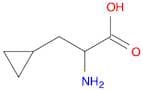
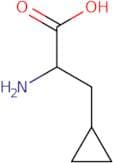
Cyclopropylalanine is a non-proteinogenic amino acid characterized by the presence of a cyclopropyl group attached to the alpha carbon of the alanine structure. This unique cyclic structure introduces strain and rigidity, influencing the molecule's conformational properties and reactivity. Cyclopropylalanine is known for its potential applications in medicinal chemistry, particularly in the design of peptide-based drugs, as it can impart specific structural features that enhance biological activity or selectivity. The presence of the cyclopropyl group can also affect the amino acid's interactions with enzymes and receptors, making it a subject of interest in studies related to protein folding and function. Additionally, its incorporation into peptides may alter their stability and resistance to proteolytic degradation. Cyclopropylalanine is typically synthesized through various organic chemistry methods, and its properties, such as solubility and melting point, can vary based on the specific conditions of synthesis and purification. Overall, cyclopropylalanine serves as a valuable tool in the exploration of amino acid functionality and the development of novel therapeutic agents.
Formula:C6H11NO2
InChI:InChI=1S/C6H11NO2/c7-5(6(8)9)3-4-1-2-4/h4-5H,1-3,7H2,(H,8,9)
SMILES:C1CC1CC(C(=O)O)N
Synonyms:- 3-Cyclopropylalanine
Sort by
Purity (%)
0
100
|
0
|
50
|
90
|
95
|
100
Found 4 products.
Cyclopropanepropanoic acid, α-amino-
CAS:Formula:C6H11NO2Purity:97%Color and Shape:SolidMolecular weight:129.15703-Cyclopropylalanine
CAS:3-Cyclopropylalanine (3-CPA) is a synthetic amino acid that is used as an enzyme inhibitor for the treatment of metabolic disorders and cancer. 3-CPA inhibits the activity of ns3 protease, which is involved in the production of malonic acid from succinate. The hydrogenated form of 3-CPA has been shown to inhibit protease activity, especially in diagnostic agents. 3-CPA can also be used as a catalyst for chemical reactions and when synthesized as a stable complex with enantiomers, it can be used as a diagnostic agent.Formula:C6H11NO2Purity:Min. 95%Molecular weight:129.16 g/mol