CAS 158563-45-2
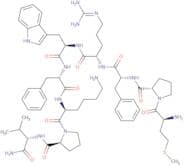
:Nonapeptide-1
Description:
Nonapeptide-1, also known by its CAS number 158563-45-2, is a synthetic peptide composed of nine amino acids. It is primarily recognized for its role in skin care formulations, particularly for its potential skin-brightening effects. Nonapeptide-1 functions by inhibiting the activity of tyrosinase, an enzyme crucial in the melanin production pathway, thereby helping to reduce hyperpigmentation and promote a more even skin tone. This peptide is often included in cosmetic products aimed at addressing issues such as age spots and uneven skin pigmentation. In terms of stability, Nonapeptide-1 is generally stable under normal storage conditions, although it should be protected from extreme temperatures and direct sunlight to maintain its efficacy. Its safety profile is favorable, making it suitable for topical applications, although individual sensitivities may vary. Overall, Nonapeptide-1 represents a valuable ingredient in the cosmetic industry, particularly in formulations targeting skin discoloration and promoting a brighter complexion.
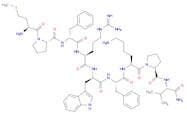
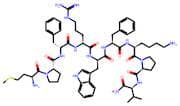
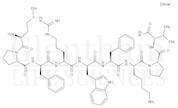
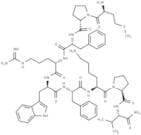
- Met-Pro-D-Phe-Arg-D-Trp-Phe-Lys-Pro-Val-NH2
- L-Methionyl-L-prolyl-D-phenylalanyl-L-arginyl-D-tryptophyl-L-phenylalanyl-L-lysyl-L-prolyl-L-valinamide
Sort by
Purity (%)
0
100
|
0
|
50
|
90
|
95
|
100
Found 7 products.
(Met5,pro6,d-phe7,d-trp9,phe10)-α-msh (5-13)
CAS:Formula:C61H87N15O9SPurity:98%Color and Shape:SolidMolecular weight:1206.5036Nonapeptide-1
CAS:Nonapeptide-1 (Melanostatine™ 5) can inhibit the synthesis of melanin, which makes it of interest for treating certain skin conditions.Formula:C61H87N15O9SPurity:100%Color and Shape:SolidMolecular weight:1206.5Nonapeptide 1 acetate
CAS:Nonapeptide 1 acetate is an anticancer peptide that acts as a kinase inhibitor. It is a synthetic analog of a protein that is naturally found in human urine and has been used in Chinese medicinal practices for centuries. Nonapeptide 1 acetate has been shown to induce apoptosis in cancer cells by inhibiting the activity of kinases, which are enzymes involved in cell signaling pathways. This inhibition leads to the disruption of cellular processes necessary for tumor growth and survival. Nonapeptide 1 acetate is a promising candidate for cancer therapy due to its potent anticancer activity and low toxicity levels. Its efficacy as a cancer treatment has been demonstrated in preclinical studies, and it is currently being investigated further as a potential therapeutic option for various types of cancer.Formula:C61H87N15O9S•(C2H4O2)xPurity:Min. 95%(Met5,Pro6,D-Phe7,D-Trp9,Phe10)-α-MSH (5-13)
CAS:(Met5,Pro6,D-Phe7,D-Trp9,Phe10)-a-MSH (5-13) is a fragment of alpha-MSH. It is produced by the coupling of 5 amino acids with a fatty acid at the C-terminus. This peptide has been found to have an anti aging effect on the skin due to its ability to stimulate the production of collagen and glycerin. It also has an active oxygen species that can activate tyrosinase and therefore increase melanin production. The enzyme tyrosinase is responsible for catalyzing the last step in the synthesis of melanin from dopaquinone. This compound may be used cosmetically or as a growth regulator in skincare products.Formula:C61H87N15O9SPurity:Min. 95%Molecular weight:1,206.51 g/mol(Met⁵,Pro⁶,D-Phe⁷,D-Trp⁹,Phe¹⁰)-α-MSH (5-13)
CAS:Potent α-MSH antagonist (IC₅₀ = 11 ± 7 nM).
Formula:C61H87N15O9SPurity:97.3%Color and Shape:White PowderMolecular weight:1206.52